Friday, November 21, 2014

The Dangers of Friending Sources

It's better to be discreet with your friending than not
John Schwartz
js135210@ohio.edu
It's difficult for me to sympathize with people who are opposed to the reaction they get from their social media posts. For instance, in one of the readings for today, a series of tweets from Cassandra Fox blew up from her modest 13,000 followers to spread all across the internet, an act to which she "'did not consent.'"

Who cares? That might sound harsh, but the internet is full of infinitely more harshness. Whether or not Cassandra Fox wanted to be part of the news cycle that day, she posted something publicly, on the internet. That gives anyone free reign to take it, pick it apart, remix it, retweet it, reply to it, etc. It is Fox's right to free speech that allows her to tweet whatever she wants, and its people's right to free speech to respond to that.

Moving on to the topic of 'friending sources,' I refuse to believe that that is a good idea in any circumstance. Our speaker from OSU urged us to stay out of ethical grey areas, which in my mind is the absolute perfect word to describe a Facebook friend. A social, ethical, and virtual grey area.

First off, the argument that you need to friend someone in order to keep a better line on them or to keep in touch with them is untrue. Most prominent people have their own page, where they will post relevant news information. Messaging is also not limited to just friends, if someone has your Facebook address they can send you a message on it.

Other argue that it blurs the line between professional and personal, making it easier to get sources to talk to you in a more informal way. I think that this is crossing into very dangerous territory. Personal and professional lines exist in order to keep our work and play separate, which serves a vital purpose. Someone who finds themselves unable to distinguish frequent sources from something much more personal has most likely lost themselves a job.

Finally, if you have the information that a source has accepted your friend request, so does the rest of the internet, regardless of your privacy settings. Especially if you work mainly online, there are people out there whose main source of fun is harassing journalists, trying to find any bit of dirt that they can bring to the argument of journalistic integrity.

If you and a source are mutually following each other on Twitter, if you are Facebook friends, if you've used a Groupon together, they will find out, and they will use it against you. An argument of, 'Oh, it just helps me keep in touch with them better' or, 'I only use my Facebook for professional purposes,' is only going to dig you into a deeper and deeper hole.

Better to not give the trolls any bait at all. If you want to keep in close touch with a source, give them your business card, not access to your whole online social life.

Ethical Issues in The Paper

By Alexandra Corsi
ac986013@ohio.edu
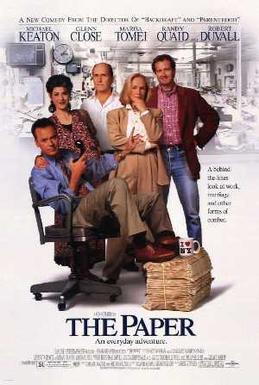
The Paper, 1994

The Paper tells the story of Henry Hackett, a reporter for The Sun tabloid in New York City. Henry faces several personal and professional ethical issues while he absorbs himself in one of the biggest stories of his career and attempts to balance his responsibilities as a father-to-be.

Personal ethics

Henry faces numerous ethical challenges in his personal life, mostly with his wife, Martha, who is almost full-term in her pregnancy. She pressures him to get a job at The Sentinel, another New York City paper that provides better pay, less hours, and an overall more secure job, especially for a man who is about to become a father. However, Henry faces the ethical question, Do I do what is best for my family, or do I do what I want?

Professional ethics

In addition to ethical issues in his personal life, Henry faces several ethical dilemmas in his career. One ethical issue stems from the vicious competition that all journalists face. Henry steals the notes about a story from the editor of The Sentinel. Stealing is generally accepted as wrong, and there is no difference with the story notes. Stealing the notes also has ethical implications specific to Henry; he loses the job offer from The Sentinel that he was pressured (especially by his wife) to take.

The importance of speed versus accuracy is another dilemma that comes up in Henry’s ethical journalistic decisions. The lines are often blurred in terms of speed versus accuracy because journalists are motivated to increase their news outlet’s profits by being the first to report on an issue, but they run into problems when the information they worked so hard to get out to the public before anyone else is inaccurate. (The Society of Professional Journalists's Code of Ethics points out that neither "speed nor format excuses inaccuracy.) When Henry and his coworkers learn about the truth of an ongoing investigative story, they must make the last-minute decision to run the accurate information, which includes some issues with the printing press (which you must watch the movie to find out!).

As journalists, we face numerous ethical dilemmas, both in our personal lives and in our careers. We must consider the stakeholders of each of these potential ethical decisions, and while it is important to do what is best for ourselves, we also should do what is best for our stakeholders. For example, one of the biggest stakeholders Henry must answer to is his wife, as she often feels abandoned during her pregnancy because Henry works such late, erratic hours. In the end, it all works out, but he does find himself in some sticky situations along the way.


The Price of Checkbook Journalism

Tyler Butler
tb238410@ohio.edu
Make Up Blog 9/22

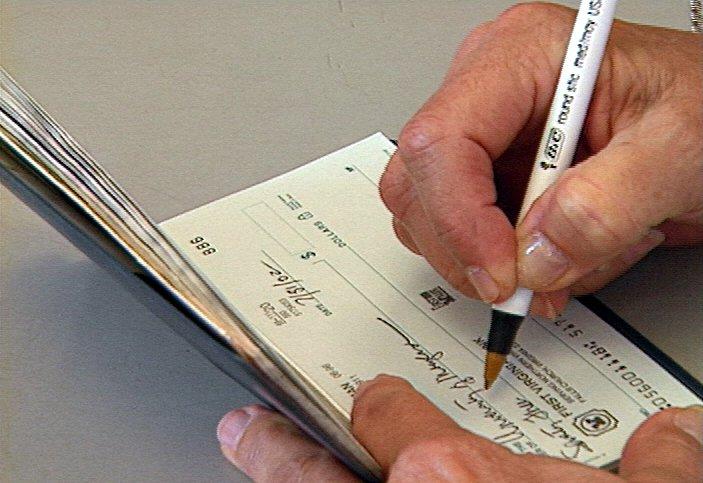
Checkbook journalism can be defined as paying money in order to receive exclusive rights to a personal interview or other information for a news story. While this form of journalism has certain advantages, every journalist should be concerned about the consequences of checkbook journalism and know the dangers associated with it.


The Pros

Paying for news has its advantages. If it didn't, then respected media outlets like these wouldn't have been doing it for so long. Checkbook journalism allows media businesses to get exclusive interviews they might not have otherwise have been able to, and gain an advantage over its other competitors. While its been debated back and forth whether checkbook journalism is an ethical practice news and gossip sites that pay for information have been the ones breaking the big stories, and other companies are joining in so they don't get left behind.

The Cons

What many journalist's are concerned about is the "slippery slope" effect checkbook journalism can have on the profession. If media outlets are willing to pay a person for their interview, what's stopping the next person from demanding as much if not even more money? There are also going to be concerns about the interview itself. Is the person making up information for profit? Did the media outlet have to shy away from certain questions in order to get the person to agree to an interview? In the end media outlets are paying top dollar to lose their credibility.

The Future

Although checkbook journalism is viewed as an easy story or even a necessity by some media outlets, a world in which people only interview for profit would be devastating to the profession. It would take power away from local papers, and place it into the hands of a few giant media businesses. Credible information would turn into a guessing game, leaving people to wonder if a person's account of an event was accurate or if they fooled someone to make a quick profit. Although checkbook journalism will never completely go away, it is essential to make sure it does not become the general accepted practice among journalists.

The Paper: Conflicts and Dilemmas

Melaina Lewis
ml662610@ohio.edu

Still the same

Though 1994's The Paper is more than a decade old, its messages and themes still hold true regarding the journalism industry. The movie depicts the reality of a newsroom and the potential conflicts reporters face in their professional and personal lives. Journalism is a fast-paced industry that makes you question your decision as fast as you make them. The film takes place in New York City at the fictional New York Sun newspaper. The story focuses around dysfunctional, yet proactive Metro Editor, Henry Hackett and a series of personal and professional ethical dilemmas.


Professional Ethical Conflicts

The Paper's main professional conflict focuses around two innocent teenagers arrested for murdering two businessmen. While the rest of the world seems to believe they're the culprits, Hackett questions their innocence. However in the middle of the day's chaos, Hackett steals the lead of the New York Sentinel during a job interview. As a journalists this is a huge ethical conflict. After hearing police officers discuss the case on a police scanner, Hackett and another Sun's reporter Michael McDougal are suspicious and launch an investigation. This decision shows Hackett and McDougal "seeking the truth and reporting it," the number one ethical code in the Society of Professional Journalist's Ethics Code. Journalists should be honest and courageous in reporting in the news, never settling for anything less then the truth. They have every right to investigate suspicious thoughts or hunches, it's a part of being a gatekeeper. As the story develops, Hackett finds out the men murdered were connected to the city's Mafia. They pursue a source from the police department for a quote to determine the boys' innocence. The methods Hackett and McDougal take pursuing a quote from the cop present ethical dilemmas. Should they be interrogating, tag-teaming, guilt-tripping and pressuring him for a quote? Encouraging him to remain anonymous purely to get a quote? All ethical concerns. 

The largest point of ethical conflict arrives when Managing Editor, Alicia Clark, prints the paper with an incorrect headline, and says they only need to be right for today not tomorrow. Hackett knows this is unethical for a journalist. It's our duty to report the truth and accuracy. He tells Clark that if people read the incorrect headline they'll believe it. In the world of news, reporting the truth tomorrow is never the case. In the real world, a similar ethical dilemma arose last year when the New York Post printed an incorrect picture on the font page identifying the wrong suspects of the Boston bombing. Journalists have to be right.

www.newscastic.com


Personal Ethical Conflicts 

While dealing with professional conflicts and ethical dilemmas, Hackett experiences outside pressures from his pregnant wife to leave his job, and make his family his first priority. These pressures affect how Hackett handles his job. Does he wait tomorrow to run a story, so he can attend a family dinner? Does he not chase a story? Is how he reports on a story influenced by his family? The pressures from personal lives affect how we make decisions and pursue actions. As journalists it's difficult to distinguish personal lives from professionals ones.

Media military relationships and embedded journalism

Corttany Brooks
cb970011@ohio.edu
Make up blog 10/22

In times of war, there is a delicate balance between government censorship of war correspondence and the right of the press to produce unregulated news stories. In essence, both rely on each other for propagation of war sentiment and both have the power to destroy each other’s credibility with the American public. 

The mistrust between the military and the media that was established in Vietnam is a sentiment that continues to be felt by both sides today. In the war in Iraq, the media and military continue to look for a balance between censorship and free press

Embedded journalism

Whether to alleviate tension or to gain political and militaristic control, the Pentagon decided to be proactive about setting up safe media relations for the war in Iraq. Unlike previous attempts to keep the press away from the battlefield, the Pentagon established a system of “embedded” reporters, which by definition are "media representatives remaining with a unit on an extended basis.” 


Embedded journalists in Baghdad (via BBC)
For the journalist there is a trade-off. Embedding will get you closer to the front line but often, it is at the price of editorial independence. And in the same way journalists use militaries to get news stories, militaries use journalists to get their story out, which proved throughout the war two agendas on a collision course.

Critics have also argued the embedding program was the administration’s attempt to build popular support for the war in Iraq. Several influential members of the Pentagon leadership and the administration believed the media contributed to defeat in the Vietnam War by demoralizing the American public with coverage of atrocities. They hoped to avoid a similar result in Iraq by limiting journalists’ coverage of darker stories on combat, the deaths of Iraqi civilians, and property damage. 

Alternatives to embedding

Although the embedding program was the dominant form of reporting during the early days of Operation Iraqi Freedom, two alternatives did exist. Though slightly more expensive than embedding, some news organizations opted to station a reporter in Baghdad. These journalists bunkered down in central Baghdad and watched as American “shock and awe” bombing raids wrought death and destruction on the city.

The second alternative—funding an independent reporter with the freedom to roam—was far more costly and largely the province of elite news sources, like The New York Times and other national newspapers. While ground commanders interacted positively with independent reporters, on several occasions Pentagon officials criticized what they called “four-wheel-drive” and “cowboy” journalists for operating outside of the embedding program.

War reporting in perspective

The relationship between the mass-media and the army is a special relationship due to the many elements that may form. For this reason, we must always remember the importance of professionalism, our ability to show impartiality, fairness, and responsibility as journalists. Both elements, the military and the media, are pillars of society; a good cooperation between the two is essential.


Military Leaders Address the Media (Via Wikimedia)

Thursday, November 20, 2014

Media construction and crime reporting

Corttany Brooks
cb970011@ohio.edu 

Make up blog 10/13

Crime reporting has risen dramatically in newsrooms across America, and some studies suggest viewers want more of these stories. As fascinating as crime may be for some viewers, is it right that a local news station air the gory details of a tragic event, possibly jeopardizing an ongoing police investigation, and violating suspects' rights? How much does the public need to know?


For reporters, the struggle over how far to pursue a story may present serious ethical and even moral complications. Investigative reporting, on any level, requires asking invasive and sensitive questions of people who may not want their privacy invaded. 

Aside from the moral and ethical objections of some reporters to acting with disregard for suffering victims, there is a far more practical reason for exercising restraint. In-depth crime reporting and investigating depends upon reporters and producers cultivating and sustaining relationships with well-placed, informed sources, like employees of the police department or other city, county, or state agencies. If a reporter burns those bridges by revealing confidential information that impedes an investigation, those sources may, in the future, refrain from sharing information.

Unfortunately (I use this adjective as a personal belief), a basic fact in the news media is that, if a story involves a brutal death or injury of some kind (or the likelihood of it), it is likely to get higher ratings. The more lurid the story, the better its chances of being the ratings leader. Natural disasters, bank robberies, shootouts, rapes, serial killers, and school violence all draw an army of news vans the same way that a limping gazelle draws a pride of lions. 

This mantra is deeply ingrained in journalistic norms. Newsworthiness is determined by several factors, and destruction fulfills many of them a lot better than news about society working its wonders another day. Also, because getting information on them is easy (through the police or government agencies via press releases) and since they take place on public streets where permits or business permission are never required to film near, they are generally rather cheap to cover. They also tend to provide flashy visuals.

Some have suggested that coverage like this, focusing on negative stories of war, death, and destruction rather than the positive things that are happening in society, is responsible for making people cynical about the world around them. People who watch the news start to feel that the world is going to hell in a handbasket, and give up on the idea that society's problems can be fixed. In addition, when the media obsess over violent crimes, deeper problems with society (such as cities running out of money) go ignored, leaving the public uninformed.

Even further, this type of coverage is even being glamorized by Hollywood blockbusters like ‘Nightcrawler’, which chronicles the life of an aspiring video journalist who spends his nights cruising the streets of L.A., hunting and prying to capture violent crimes or accidents on his video camera, in order to sell the footage to news stations. Although this film presents an extreme and stylized reflection of the news industry, people love the narrative, and our industry phrase, “if it bleeds, it leads” remains at the front of the news scene. 


'Nightcrawler' Official Trailer (Via Youtube)

If You're not First, are you Really Last?

Kaitlyn Marshall
km934711@ohio.edu
Makeup Blog for 11/3

Social media has opened up many doors for journalists to tell their stories. Whether its tweeting breaking news on twitter, vining about conflict in Ferguson, or even sharing an article on Facebook, journalists are using social media to their advantage. According to the Pew Research Center, approximately 30% of adult Facebook users are using Facebook to get their news. While this may make it seem like social media is the end all to be all for news it most certainly has it faults.


While most of us are connected via some form of social media, we as journalists have to remember that our first duty to the public is to do as little harm as possible. That being said, when we tweet out breaking news or tweet out a story it should face the same scrutiny as it would to get to print, go online, or go on air. We have to make sure what we are telling the public is in fact, fact.

Social media is a great tool to be used by journalists. It provides us with a captive audience who can tune in at any time around the clock to get their news. However, if we want that audience to continue to return and trust us as a reliable source we have to be reliable. We want our viewers to be loyal and in order to make sure we have a loyal viewer base we have to be honest to them as well.

Gen Xers like myself who have grown up with the internet are now being taught to watch what they put online. “Don’t post that if you want to get a job” is a tune that is constantly tooted to us and that many in my generation know far too well. We are told to keep ourselves safe and to always think before we post. Why is the same practice not drilled into the heads of every person who heads the social media for anyone who is claiming to provide the world with hard news?

In the days before social media there was more time left to check sources, however now with the onset of 24/7 news and getting it as fast as possible, there is bound to be something that is lost in the translation. Sadly for all of us, the thing that gets lost sometimes is fact and getting that time to fact check. Everyone is so obsessed with being first that we have lost touch with what is really important. When CNN first broke the story of the Boston Bombings 2 years ago, in the race to be first, they got key elements of the story completely wrong. Do we as journalists need to take a step back to evaluate what matters more to us? Getting the facts out, or breaking the story? Social media is both a blessing and curse to the news media. We hope to keep citizens informed, but we have to make sure we keep them informed with facts and not with the sensationalism of being the first ones to get a story online.