Showing posts with label watchdog. Show all posts

Friday, November 21, 2014

Media military relationships and embedded journalism

Corttany Brooks
cb970011@ohio.edu
Make up blog 10/22

In times of war, there is a delicate balance between government censorship of war correspondence and the right of the press to produce unregulated news stories. In essence, both rely on each other for propagation of war sentiment and both have the power to destroy each other’s credibility with the American public. 

The mistrust between the military and the media that was established in Vietnam is a sentiment that continues to be felt by both sides today. In the war in Iraq, the media and military continue to look for a balance between censorship and free press. 

Embedded journalism

Whether to alleviate tension or to gain political and militaristic control, the Pentagon decided to be proactive about setting up safe media relations for the war in Iraq. Unlike previous attempts to keep the press away from the battlefield, the Pentagon established a system of “embedded” reporters, which by definition are "media representatives remaining with a unit on an extended basis.” 


Embedded journalists in Baghdad (via BBC)
For the journalist there is a trade-off. Embedding will get you closer to the front line but often, it is at the price of editorial independence. And in the same way journalists use militaries to get news stories, militaries use journalists to get their story out, which proved throughout the war two agendas on a collision course.

Critics have also argued the embedding program was the administration’s attempt to build popular support for the war in Iraq. Several influential members of the Pentagon leadership and the administration believed the media contributed to defeat in the Vietnam War by demoralizing the American public with coverage of atrocities. They hoped to avoid a similar result in Iraq by limiting journalists’ coverage of darker stories on combat, the deaths of Iraqi civilians, and property damage. 

Alternatives to embedding

Although the embedding program was the dominant form of reporting during the early days of Operation Iraqi Freedom, two alternatives did exist. Though slightly more expensive than embedding, some news organizations opted to station a reporter in Baghdad. These journalists bunkered down in central Baghdad and watched as American “shock and awe” bombing raids wrought death and destruction on the city.

The second alternative—funding an independent reporter with the freedom to roam—was far more costly and largely the province of elite news sources, like The New York Times and other national newspapers. While ground commanders interacted positively with independent reporters, on several occasions Pentagon officials criticized what they called “four-wheel-drive” and “cowboy” journalists for operating outside of the embedding program.

War reporting in perspective

The relationship between the mass-media and the army is a special relationship due to the many elements that may form. For this reason, we must always remember the importance of professionalism, our ability to show impartiality, fairness, and responsibility as journalists. Both elements, the military and the media, are pillars of society; a good cooperation between the two is essential.


Military Leaders Address the Media (Via Wikimedia)

Tuesday, September 10, 2013

Word Wide Watchdog... Good or Bad


Meg Omecene
megomecene@gmail.com
@megomecene

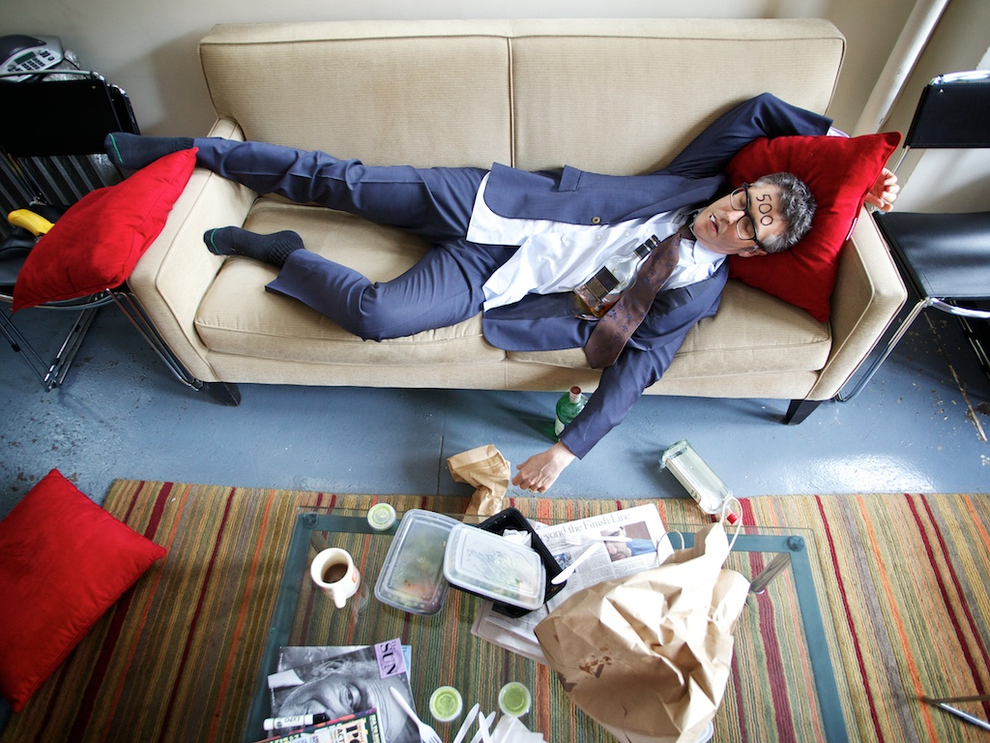
Every night for the last four years, I have fallen asleep listening to the soothing sounds of Ira Glass’s narration of one of the more than 500 episodes of This American Life. I could contend for the show’s biggest fan award and constantly mention anecdotes from that week’s episode in everyday conversation. (Sorry to all my non-public radio- loving friends.)
Ira Glass has a 500 episode hangover. (Photo courtesy Buzzfeed.)

This summer, as This American Life rolled over to its 500th episode, host Ira Glass was hit with accolades of praise for the innovation and continuity of the show, which has tackled subjects from healthcare to heartbreak. In an interview with Buzzfeed, Glass said that one of his favorite episodes was from 2011 and came to have a significant impact.

(Video courtesy newsy.com)
The aforementioned episode detailed the alleged transgressions of a Georgia county court judge who was showing those who came through her court “very tough love.” The episode employed watchdog journalism to enumerate multiple cases that the judge had chosen harsh punishments for minor crimes. A few months after the story aired, the judge, Amanda Williams, stepped down.

This instance of watchdog journalism shows the power that the press can have. In exercising this power, Ira Glass and the rest of the crew at This American Life were able to right wrongs that could have continued for years. This ability, unique to the press because of its visibility, allowed the dizzy -with-power judge’s reign to end. According to Glass, “The presence and visibility of the radio show about her — I know this is true because I’ve talked to people now who were part of that process — raised the profile of that case and kind of expedited it. They brought charges against her, and she stepped down from office.”

However, sometimes that visibility can wrongly do damage, and then it is the press’ duty to right it. In one of the most popular This American Life episodes, “Mr. Daisey and the Apple Factory”, Mike Daisey spun a tale of the woe of those who work in some of China’s Apple factories. There was widespread public outrage over the allegations. However, a few episodes later, for the first time in This American Life history, Ira Glass had to produce a retraction episode.

How much of the seeds of beliefs of wrongdoing can really be wiped out? It is the press’ duty to ensure that the facts in possibly libelous stories are correct. While that may seem like a “no-duh,” perhaps if I were in a newsroom and a story like the Mike Daisey’s broke, I think that it would be very hard to struggle with the craving to be first with the need to confirm every detail of the story.

I think that these conflicting pressures are a huge ethical dilemma for journalists and it is important that we are aware of this going into the field. While I do not think that This American Life was irresponsible in publishing their original story, and they did everything in their power to rectify their wrong, it still could have hurt Apple’s reputation.