Friday, May 13, 2022

Ethics: The Fifth Estate

Shannon Limbach

SL668021@Ohio.edu

Principles of Journalism 

As members of society, we tend to design our paths through life with an assumption that those around us have similar moral and ethical standards. These standards of goodness, honesty, and service to others often are conceived through the marriage of nature that surrounds us and the nurturing we experience. Difficult upbringings may lend way to the duplication of those actions; or the pendulum may swing in the other direction and create a favored life from a parent who once struggled. 

Moral and ethical standards for journalism are not just assumptions, they are practiced principles that society as a whole is dependent upon to secure our well being and democracy. When journalistic ethics are bent or curved in order to achieve an unscrupulous agenda, we all suffer. 

We Are Number Five 

Journalistic standards and responsibilities go beyond professional endeavors. With the advent of the internet, social media, blogging, comment sections, and community participation on websites, where do our own personal ethics in journalistic standards begin and end.  Bill Kovach and Tom Rosensteil from Elements of Journalism: What newspeople should know and the public should expect list 10 journalistic principles to follow . Most notably is number 10, "Citizens have rights and responsibilities when it comes to the news as well-even more so as they become producers and editors themselves." 


Image Source: 

Risks

Citizen journalists carry risks on their endeavors when they reject due diligence. Please review this piece by Hadley M. Dreibleis "Social media statements made with specificity and serious tone would be treated more like actionable statements of fact rather than per se hyperbole. Any resulting potential for increased liability from the falsity analysis could be counterbalanced by heightening the requisite level of intent for alleged defamers to actual malice—particularly when plaintiffs are “influencers” with large social media followings. Courts should treat all online platforms consistently when conducting this analysis, recognizing that Twitter and blogs are no longer mere casual conversation platforms. "

Rights

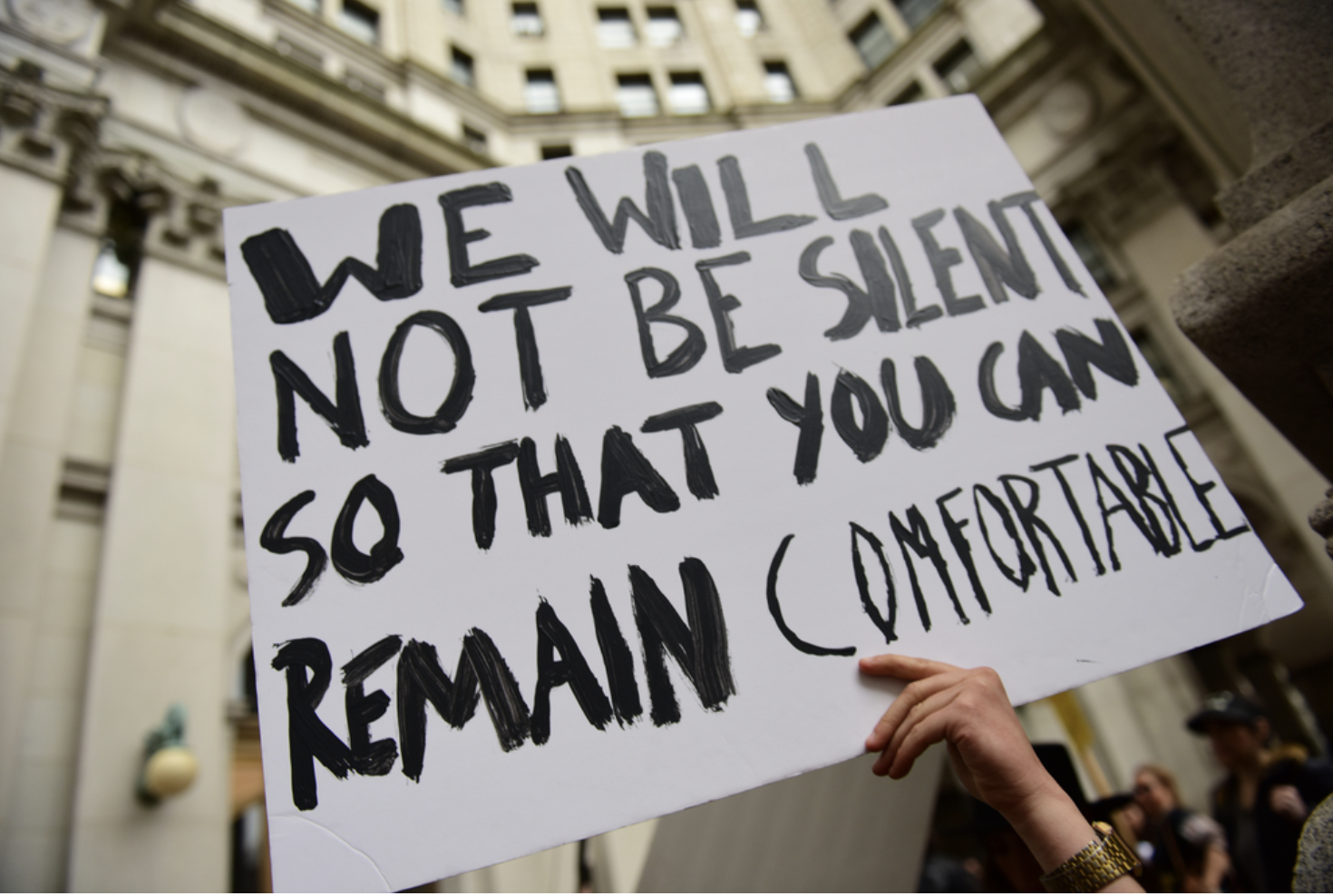
Adopted on December 15, 1791, as one of the ten amendments of the U.S. Bill of Rights, the First Amendment states: "Congress shall make no law respecting an establishment of religion, or prohibiting the free exercise thereof; or abridging the freedom of speech, or of the press; or the right of the people peaceably to assemble, and to petition the Government for a redress of grievances.” As citizens we have a Right to expression and protest. We have a Right to join with others in our pursuit of progress. We have a Right to stand up for our beliefs. In fact, I believe we have a moral obligation to fight for ourselves and others. Progress is not achieved through silence or behind closed doors. 


Responsibilities

As new producers and editors actively participating in the world of social media journalism, what foundational responsibilities do we have to ensure we are protecting free speech while simultaneously ensuring we are not spreading falsehoods and misinformation? As an active participant on Twitter , I regularly review articles and noteworthy tweets for their accuracy long before I will retweet or post. I review certified votes of congressional members here  , as I am an active participant in securing our Democracy. 

I freely admit that I am not perfect. But I hold dearly my new role as the Fifth Estate, assigned sequential number 10, which concretely lays out the Elements of Journalism. I am keenly aware of  my social obligations, risks, rights and responsibilities and practice them diligently.   

False Facts in Media

     Today's news has so many components that make it impossible to know what is accurate and reliable. This is not the fault of journalists. It is the way news is portrayed due to the Internet and its instant access to news. As technology companies rise to the power becoming the leading news sources exceeding ordinary news outlets the trust in the news has dropped. Facebook, CNN, and Fox News have an agenda to create sensationalism and profit.    

 Abortion rights are not part of the Constitution so the Supreme Court wants to return the right to abortion back to each state for jurisdiction. Many people have not read or really listened to what this issue is all about. They see protests and false commentaries so they assume they know the truth behind this issue. People are up in arms. On the news, people are saying that protests and riots will begin again if the justices vote to overturn Roe v Wade. 

   All of this sensational news could be avoided if people could distinguish between propaganda and news. Journalists are not reporting this information. According to The Elements of Journalism, “A lack of clarity about what journalism should be and how to intellectually consume the news has also left both journalists and the public less equipped to cope with the effects of the digital transformation.” 

   The major news outlets feature television hosts as authorities on very important issues facing American citizens. They are not really interested in the facts of the story. They are interested in ratings and sponsors. Many times important details are left out of the report. Sometimes innuendoes are made to sound like facts. Many times listening to these broadcasts a person will hear Russian collusion. What does that even mean? It does sound awful. In the article Americans see Skepticism of News Media as Healthy the author states, “Many Americans remain skeptical toward the news media, questioning not only the quality of journalists’ work but their intentions behind it"  

  News reporting is going through a transitional period. People are craving to hear real news, not opinions. A journalist's first obligation is to the truth. That is something every American needs to hear. A journalist is loyal to the citizens, not major corporations. Journalists must present the news in a way that is comprehensive and proportional avoiding personal agendas and sensationalism. As the reading states the question about whether or not news will survive, ”As a source of independent and trustworthy information or will it give way to a system of self-interested propaganda, of citizens consuming information in narrow channels of filter bubbles, where disinformation and false claims we want to believe are more likely to flourish.” Let’s return to honest journalism.


News in a Changing World

Julia Batoki

jb478621@ohio.edu

Journalism in The Modern Era

Information found in the introduction and first chapter of The Elements of Journalism states that journalism as a field and as an information source needs to evolve and change. This is because of the technology that is readily available in today, as well as the changing method in which as a society, we now absorb our news. 

Journalism's goals and purpose have differed from what they once were. As a result, people have begun to believe that journalism as a whole has become displaced, and that its role as fact-finders is obsolete. Some believe that regular citizens and technology can easily replace the outdated journalist. However, others believe the opposite side of the spectrum, that journalism and fact finding are the only acceptable methods to receiving the news accurately and that technology and bloggers should not be relied upon. 

Opposing Views

The Displacement Theory of News states that journalism can transition away from its traditional stance of researching, interviewing, finding facts, and reporting them. Instead, this theory explains that journalists should verify other sources of information, from the internet or blogs, and interpret in their own way. 

The goal in this is to use modern technology and resources to change journalism. In addition, it is believed that they should get their information from the public instead of from their own sources, and afterwards interpret it. Oppositely, some believe that the role and job of a traditional, fact-finding journalist is nonexpendable and cannot be replaced. 

What's the Solution? 

According to a recent article, the overall purpose of journalism is to provide the communities that they serve with the best, most accurate information that they can in order to help them make informed decisions.

 In The Elements of Journalism, the best way to accomplish this is to merge the two opposing beliefs and meet in the middle for a compromise. This can be done by utilizing all forms of technology, from social media and blogs, to video uploads, and incorporating these sources as one of information. This would allow technology, journalists, and regular citizens to work together. 

The authors state that each one of these entities brings their own strengths to the table of Journalism. Technology adds accuracy and a new perspective while journalists bring expertise and an inside access into otherwise inaccessible sources. 

Furthermore, the civilian population adds additional knowledge and new observations. Together, the field of journalism can evolve and change with today's modern times. It can grow, become more efficient and trustworthy, and maintain its importance in our day-to-day lives. 

Image Source: Mobile and Social Media Journalism

Thursday, May 12, 2022

The Awareness Instinct

Gina Thurston

gt213919@ohio.edu


News For a Changing World

After reading the introduction and first chapter from The Elements of Journalism by Bill Kovach and Tom Rosenstiel, I determined that throughout history, humans have had an innate desire to report the news and compare it to what others have heard. It doesn't just stop there. Historically, human beings have wanted to know what is happening in other areas to help make sense of what is happening in their world. 

In a Nutshell...

From the early days of civilization through the modern era, the news came by word-of-mouth or some form of print. Whether it was by a designated spokesperson, like in early tribal civilizations, or by developing technology like the radio or television, people waited for the news to be delivered. The news would come, usually at a certain time and format. In my lifetime, this was waiting for the morning paper and evening news on TV. Everyone received the news at the same time and in the same way. 

With the internet becoming a household commodity and increasingly portable, news became something that had to deliver fresh stories throughout the day. Television tried to keep up with a 24-hour breaking news channel, but it was no match for up-to-the-minute news that was now in demand on our tablets, smartphones, and laptops. 

Image Source: John Carroll


At What Cost?

In one word: credibility.

So, going back to the very beginning, the human need that we're all ingrained with to know what is going on around us is an essential part of how we make sense of our own lives is now at our fingertips. No more waiting for the newspaper, no waiting for the evening news. This fulfills another desire: to be the first in the know. This s a big one. This is what turns credible, reliable, verified news into fake news and clickbait. There is a race to put the latest word on the internet, and a race to read it and report it to our friends, family, and peers. 

This article describes how we consume news today. Through our favorite social media apps and websites, readers are inundated with headlines that they click on, and it takes them to an often not well-written piece on current events, celebrity scandals, politics, or crime. It seems to be more like the news is consuming us. 

Who to trust?

In this new era of journalism, when we need credibility now more than ever, this article (which is also written by the authors of our textbook, Kovach and Rosenstiel!) recaps the journalists' creed and why it's so important when the truth is sometimes complicated. The article goes on to describe how an ethical modern era journalist helps our confused world by eliminating the self-promoting, misinformation, and disinformation from their stories. Then, the public can sort through the information and draw its own conclusion without the writer adding their narrative. The press only needs to concentrate on verification.

Modern-day humans will benefit from seeking out credible and ethical sources. Too often, we are drawn to the outlet that establishes the echo chamber in which we are comfortable. Our drive to be aware has been blurred by the presumed luxury of picking and choosing which news we want to hear and be true, for that matter. Will social media news sources obscure our inherent need for awareness of our modern world?

Times Change, the News Hasn't.

Amanda Sherman

as480920@ohio.edu

How it Started

Reading through the Introduction and the first chapter of The Elements of Journalism by Bill Kovach and Tom Rosentiel, you get a sense of how news delivery has changed over time, but the meaning of the news has stayed the same. Through the years, new technology has brought new advances in how to spread the news. 

News has been dated back to ancient times. Romans would post daily news about their senate, politics and daily happenings on Papyrus and then it would be posted in place where the public gathered. This is essentially no different than posting on a community board at a local college. It's no secret that coffee places are the best place to get local chat and gossip, again this is no different than the news postings in the 17th Century in England or the early pubs of America. 

Since then, the local chatter turned into printed paper focused on "public opinion" as mentioned in the text, dating to the 18th Century when free speech and free press was realized. This started with Cato speaking out against the norm of news at the time. An article cites that it was the writers behind Cato that gave unreserved endorsement to free speech as being indispensable. Thus starting a trend in news that became rooted in America. 

Over the next 200 years, print continued to develop and so did the news. Better machines and more brands popped up. The news could be read through newspapers and magazines at first then radio and television were developed with news hours and 24/7 news channels. It got an even further reach when the internet was developed.


Image Source: Sotheby


How it is Going Today

Today we live in a world where there are endless ways to get the news. Social media is at the forefront of this narrative. As mentioned in the book, social media has changed the way we get news and how it reaches an audience. A recent article reported on a study that showed over fifty percent of internet users get their news from social media. With this being known it makes it easier to understand that we are the newest way to get news out. We have become the editors, researchers and news gatherers according to the text. With every share, like, and search we get the news out there.


Image Source: Netbase Quid


Has the News Changed?

Over time it is clear that the way we get the news has indeed changed. We no longer have written scrolls left to view in a town center. We are not as afraid to speak our mind in the news as we once were over two hundred years ago. Developments of the internet and social media have paved the way for countless more ways to get the news.

 But still the news itself hasn't really changed. It is still a form of public opinion. Generations of advancements and people have indeed changed the way it is received but not what people want. In short, people still want to know what is going on in their city, the country and the world. 

Tuesday, May 10, 2022

Modern Journalism: A Fork in the Road

Hunter Folks

hf346318@ohio.edu

Village to Villa

The introduction to The Elements of Journalism, written by Bill Kovach and Tom Rosenstiel, presents a history of journalism rooted in the human desire for socializing and learning. Journalism, historically, has given people the information they need to make decisions and govern themselves in a way that is conducive to personal freedoms. Journalism has been essential for the development of societies around the world. Although journalism today looks much different from horse riding couriers of the past, the core of reliable sources of information and engaging retellings remains the same.


Image Source: Mike Grabham

A Question of Necessity?

The way information was shared by journalists and individuals alike did not change much for most of history. Spoken or written word always came with the prerequisite of requiring an individual to deliver this information in person; in today's world, however, this is not the case. Technology has allowed individuals to find the information they want at any time, and gives them the ability to share or re-share that information instantly with anyone in the world who has an internet connection.

This begs the question, is dedicated journalism valuable to us as a society in today's world? 

An article by The New Yorker argues that it does, but that format innovation is essential in a world where old concepts like newspapers are on death's door.

The answer is almost definitely a resounding yes, however, the role journalistic organizations play may look much different from the past.

A New Direction

Journalism has begun to evolve alongside technology, and its purpose in society is beginning to change as well. The slew of information sharing online has allowed people the opportunity to appreciate differences in the quality of the reporting. This article details the shift in the industry that is currently happening by journalism focused establishments towards becoming reputable arbiters of quality among a sea of unchecked news sources.

This is in line with the thoughts of the authors behind The Elements of Journalism as well. It is a massive shift from the traditional ideas that have powered media companies for years; being first to publish new information used to be essential, but in a world where everyone has a camera and can share events instantly there is a clear need for some sort of quality control. Rather than silence or limit the speech of individuals, a possibility exists for journalists to become the gatekeepers of what is considered confirmed and legitimate information. This opportunity for change has arisen as people now seek consistent and reliable sources to confirm rumors or information they consume through online platforms.

Sunday, May 8, 2022

The New Challenge

James Weiskittel
jw571818@ohio.edu

Yesterday's News


Considering the opening chapter from The Elements of Journalism, by Bill Kovach and Tom Rosenstiel, I was struck by how far back the proverbial roots of Journalism can be traced. From balladeering minstrels during the middle ages to the first newspapers showing up in England during the early 1600s, the idea of ‘spreading the news’ is hardly a modern concept. And yet, as someone who has paid attention to the news my entire life, I’ve always thought of it as a product of the moment. In actuality, I feel that Journalism is as much about shaping the present as it is preserving the past. If anything, ‘yesterday’s news’ provides us with an important snapshot of where society has been.


Image Source: Jackie Snowden

A Thing of the Past

The text also spends a great deal of time discussing the wave of consolidations that occurred in the wake of the internet age and the morphing of the term media. With the proliferation of conglomerates incentivizing profit over traditional journalism, the “new challenge” has become maintaining the purpose of Journalism (“to provide people with the information they need to be free and self governing”) during a time where said purpose has fallen out of fashion. Many dismiss the idea of ‘Journalism under fire’ as hyperbolic hysterics, but I personally remain concerned that the traditional press as I once knew it is quickly becoming a thing of the past.


Image Source: Christopher Wink

10 Elements of Journalism

For evidence one only needs to look at the ten elements of Journalism (as cited in the text’s introduction)–ten calls-to-action that have served as the guiding light for ‘good’ journalism. For instance, Journalism’s first obligation (to the truth) only holds water if what constitutes the truth can be agreed upon. 

As we have all witnessed, the idea of a ‘personal truth’ has become more and more prevalent over the past decade, to the point where there are now multiple ‘truths’ being pedaled by media giants to a like-minded audience. It begs the question: if Journalism’s first loyalty is to its citizens, how can any one organization hope to cater to all when their potential audience remains divided in two opposing viewpoints. In fact, the fallout from our society’s political polarization mutes nearly every call-to-action on the list. Let’s take a look at a few more examples:


Discipline of Verification

“According to an anonymous source” is so commonplace in modern reporting it renders the idea of sourcing all but unnecessary. This article regarding “the scourge” of anonymous sources perfectly sums up my point.


Provide a Forum for Public Criticism and Compromise

Well, at least Journalism is serving one of those. As for compromise, I fear ‘we’ (as in society at large) have a long, long way to go.


Present the News in a Way that is Comprehensive and Proportional

I nearly laughed out loud when I read this–proportionality seems like a foreign concept these days. Few would argue that there is a massive divide separating Americans into one of two categories, and to that point, news entities are incentivized to pander to one or other. Thus, what constitutes 'big' news merely depends on what channel you're watching. For further reading on this point, this article (by the authors of the text) is an interesting read.

Image Source: David Parkins

And Finally–Citizens Have Rights and Responsibilities...

(...When It Comes to the News)

Of all of the things I read in this first selection, this point remains etched in my mind. Perhaps it’s because, at forty-one years of age, I’ve never once considered the idea that I have a responsibility to the news. In fact, like many people, I am ashamed to admit that I rarely think about my personal responsibility outside of the context of my family. And in that admission, I acknowledge that even I bear some responsibility for the current state of journalism. Perhaps we all do, in one way or another.