Thursday, October 1, 2015

Diversity in the Newsroom = Diversity in Coverage

Krystal Thorp
kt085814@ohio.edu

Did you know that of almost 33,000 people employed by a daily newspaper company, less than 13% are minorities?  This is even a relatively high number compared to the 3.95% employed back in 1978.  The American Society of News Editors has conducted a yearly consensus to demonstrate the rise and/or fall of minorities in the newspaper workforce. 

Projections based on responses to annual employment census
(numbers rounded)

Total
Work Force
Minorities In
Work Force
% Minorities In
Work Force
1978
43,000
1,700
3.95
1979
45,000
1,900
4.22
1980
47,000
2,300
4.89
1981
45,500
2,400
5.27
1982
49,000
2,700
5.51
1983
50,000
2,800
5.60
1984
50,400
2,900
5.75
1985
53,800
3,100
5.76
1986
54,000
3,400
6.30
1987
54,700
3,600
6.56
1988
55,300
3,900
7.02
1989
56,200
4,200
7.54
1990
56,900
4,500
7.86
1991
55,700
4,900
8.72
1992
54,500
5,100
9.39
1993
53,600
5,500
10.25
1994
53,700
5,600
10.49
1995
53,800
5,900
10.91
1996
55,000
6,100
11.02
1997
54,000
6,100
11.35
1998
54,700
6,300
11.46
1999
55,100
6,400
11.55
2000
56,200
6,700
11.85
2001
56,400
6,600
11.64
2002
54,400
6,600
12.07
2003
54,700
6,900
12.53
2004
54,200
7,000
12.95
2005
54,100
7,300
13.42
2006
53,600
7,400
13.73
2007
55,000
7,400
13.43
2008
52,600
7,100
13.52
2009
46,700
6,300
13.41
2010
41,500
5,500
13.26
2011
41,600
5,300
12.79
2012
40,600
5,000
12.32
2013
38,000
4,700
12.37
2014
36,700
4,900
13.34
2015
32,900
4,200
12.76

From the image above, you will notice that there was a steady increase from 1978 through 2000.  However, after that time the numbers began to fluctuate.  But why does this matter?  How does having minorities in the newsroom affect me?  Well my friend, you are in fact impacted in a huge way by the diversity that your local newsroom may or may not have.

By having a diverse culture, the newsroom is being brought into a new realm that reaches a wider array of audiences.  More culture brings more opinions, which in turn brings in my stories that others had not even considered.  Kevin Merida of The Washington Post said it best “…we’re in the business of explaining people to each other.  How can we do that if we don’t have enough variety in our newsroom?” 

A Latino news anchor will not report on the same issues as an African American news anchor.  The same can be said for every represented culture in America.    Had your local news reporter been a person of color, your entire evenings broadcast last night might have gone a little differently.  Diversity brings more stories, more opinions, and greater wisdom. 

For more staggering statistics check out these Media Matters For America articles by Matt Gertz, Rob Savillo and Oliver Willis.   

Who knows? Who Cares?

T.L. Schilling

Who knows? Who cares? Who should know and who should care? Can a CEO of a large conglomerate or even the President of the United States be expected to know everything that goes on with the people they have working for them? Sometimes I think that the answer is yes simply because someone has to pay.

According to website mediamatters
, in a rush to get the “exclusive” on the terror attacks on U.S. diplomatic facilities in Benghazi in 2012, CBS appears to have taken some unethical approaches to reporting it. It is said that many, if not most employees get their ethical approach to do their work from the top management of the organization. If this is truly the case in this instance then why were only reporter Lara Logan and her producer Max McClellan put on indefinite leave for their role in reporting the story. Finally, CBS did admit that it failed to disclose that the supposed eyewitness of this whole story, Dylan Davies’ book was published by Simon & Schuster, which by the way, is owned by CBS.

                                      
                                                       Courtesy of Media Matters.org

So, with the long standing issues that people have always had with business ethics and accountability, we developed a term to help justify it; plausible deniability. According to changefactory.com.au, it can be used by anyone from you and I at home to the President of the United States. Can it used to protect those at the top so they can legitimately deny knowing what went wrong? Yes. Can it be used to describe a lack of accountability within an organization and those at the top? Yes.

It may be plausible to even think that since the time when humans first started roaming the earth, someone has been denying knowing the truth about something or maybe just not disclosing all the facts. We see it sometimes when trying to get to the bottom of a situation with our children. We ask 20 questions about who broke something in the house. When it’s all said and done, sometimes the child will just look at you and say “well, you didn’t ask me that.”

The technological age is upon us and with that comes being viewed by many more eyes than before.  People have developed many theories as to why even “good” people make some of the poor ethical decisions that they do. In a 2011 issue of The Public Relations Strategist they suggest reasons anywhere from unrealistic goals being set for them by management or fear of losing their job. Demands put on them to continually beat the competition to management’s willingness to overlook the smaller infractions as long as the employee is meeting goals and expectations. Personally, I think those are crutches for people to use while trying to rationalize their actions to others.

There are numerous guidelines out there for journalists and media to follow, such as the code of ethics set forth by the SPJ that lead the way for responsible and ethical journalism. The Whistleblower Act of 1989 protects those people who choose not to participate in unethical or in some cases, criminal activity.

Someone once said that with authority, comes great responsibility and that speaks volumes as to what true journalism is. They are afforded the opportunity or authority to report the news, but they must be responsible in how they do it.

 The bottom line is that each person, guided by their own moral compass throughout life, makes good decisions and bad decisions. In the end, who really knows?

The Eye of the Beholder

Diana Taggart
dt724909@ohio.edu

Our subject matter this week is racism and how it is portrayed – consciously or not – in the media. We also read a bit about the media becoming the story. Here is my take on the story.  As long as there are two sides to every story, there will be biases (racism). It is human nature and permeates our lives.

That is not to say that we cannot change a bias, only that we will always have them. Most of us were taught a race bias in our childhood by our first teachers – our parents. Mine were rampant racists. “You can go to school with them (meaning blacks) but don’t you ever bring one in this house!” said my lily-white, Southern mother.

Some were made into racists by an experience or maybe multiple experiences. I was ‘cured’ of most of my prejudices against other races by my three year stint in the U.S. Army, where I bunked side by side with blacks, Hispanics, and others. We ate together, worked together, and hung out together. 

There is no one reason why someone would despise or look down on another. Consciously or unconsciously it has become a part of the American psyche. Blacks often feel the same way about whites. The problem is (or at least ONE of the problems is) that the media is supposed to be unbiased, impartial, and refrain from becoming part of the story or to slant their stories to support a particular bias.

In the Nieman Reports, “Why Newsroom Diversity Works” article, it states: “The 2014 Newsroom Census conducted by the American Society of News Editors (ASNE) found that only 15 percent of daily newspapers surveyed in 2013 had a person of color in one of their top three newsroom leadership positions.” That is an abysmally low percentage when one considers how many newsrooms there are across America. 

It is hard to have unbiased reporting when the majority of the reporters are of one race. The same article quoted Anna Holmes, founder of feminist blog Jezebel and an editor at Fusion, as saying, “I think that the problem is that racial issues still make more people uncomfortable than women’s issues.” How can we fix something if we can’t even discuss it without feeling uncomfortable or threatened?  

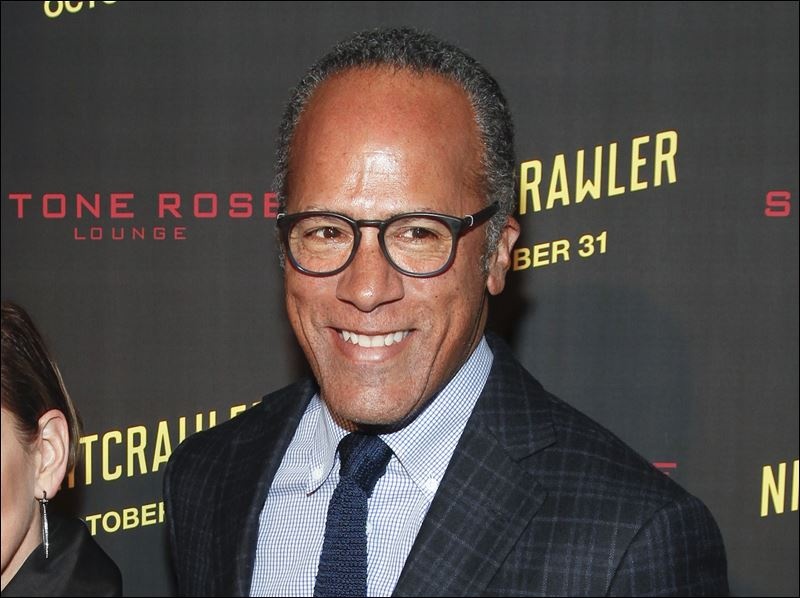
toledoblade.com
One of my personal favorite ‘celebrities’ is Lester Holt of NBC News. Lester is a man of color who has “made it” in the media, commanding over a million dollars as an annual salary. Not everyone has worked so hard and gotten the rewards of his labor as has Lester. “You know, I’ve never identified myself professionally through a racial lens, but I recognize it’s important,” said the 56-year-old journalist, whose mother is Jamaican and father African American. “It’s important that people turn on the TV and see people who look like themselves.” (BlackEnterprise.com article by Courtney Connley)  Lester does not look anything like me, but I trust him to deliver the news in a no-nonsense sort of way.

As long as we have mostly white men and women reporting, and mostly white men and women photographers and camera operators, we will have mostly white sided stories. It is frustrating that the daily local news shows the suspects in crimes and most of them are black. When they do show a white perpetrator, everyone seems surprised. It’s all in one’s perception. What is yours?

Different Face + Same News=Diversity?

bk562515@ohio.edu 

Diversity in the media? Absolutely! How can anyone say it isn't diverse? When the O.J. Simpson trial began, news stations from around the world were camped outside the courtroom and fixated on this case.  Everyone reporting the same story!

Media Effect on The OJ Simpson Murder Trial


The Code of Ethics from reporters near and far were literally sawed in two by this coverage. The competition was fierce. The ratings blew through the roof. That makes it diverse, right?

"… The most disappointing aspect of this entire trial to me was the role of the media. The press went at this case like a bee going after honey. They were just obsessed with it to the point that facts didn't matter; tainting evidence didn't matter; undermining the criminal justice system didn't matter. It was gotcha journalism. It was 'If it bleeds, it leads.' It was 'Anybody who has anything to say, we want to hear it, whether or not we believe it's credible.' And I think it was, in a sense, an embarrassment to the First Amendment in the sense that you want to make sure there's free opportunity for expression.
But on the other hand, what the media did was feed the public an image of this trial that was deeply skewed, deeply flawed and ultimately untenable. The press made many, many mistakes, and I think it cost the prosecution losing witnesses, losing evidence and giving the public a perception of guilt without giving them all of the reasonable doubts that were clearly developed during the course of this very lengthy trial."


Charles J. Ogletree Jr., Harvard law professor and 
director of Harvard's Houston Institute for Race & Justice.

The problem with the media is there doesn't seem to be any diversity in the news they are reporting, not who is reporting it. It seems it's all the same, just a different reporter. The media hypes things up. Somewhere along the line, a reporter told a gruesome new story, probably gave the disclaimer "viewer discretion advised", and then the ratings drastically increased. This trend seems to have caught on to every reporter in the United States of America. It seems all the breaking news is tragic news. 

The media has the tendency to over publicize. They like to act like the judge and jury before someone has even been charged with a crime. The media needs to be held accountable at the highest level for the stories they choose to air. I think the media goes too far and uses poor judgement more often than not.

Isn't there something else going on that would benefit public awareness? Why don't reporters do their due diligence and dig deep into some real issues in this world. Starving families, homelessness, human trafficking, the refugees--why don't they choose to be the voice for those without one? If just one reporter would concentrate on the humane issues we should be doing something about, others will follow suit. Maybe even the American people will join in and volunteer to help or send money for aid.
As far as diversity regarding a reporter, does it really matter who is behind the camera? Does it really matter what ethnic background a reporter has?  Is the message any clearer if an African American is reporting on another African American? The issue at hand is all reporting needs to be unbiased. So if the reporter is from the same ethnic background, is the news going to be fair and unbiased? 

Journalism is an extremely competitive career. It isn't for everyone. Not everyone has interest in this field. And for those who are interested, not all are cut out for it. The bottom line is that reporting needs to be truthful, unbiased facts. Who delivers it to the public, earned it!

Media's Diversity Problem

Brittany Oblak
bo095812@ohio.edu


As a few of our readings highlight, the diversity (or lack of) in not only news media but media in general is nothing short of abhorrent. Diversity pertaining not only to race, but to other marginalized populations as well (LGBTQ) and especially those who deal with intersectionality (i.e. someone who identifies as both queer and a minority, such as a black female who is also a lesbian).

Decades ago, we had white, straight males putting on blackface and wigs because there was no room for actual black (and sometimes female) actors in Hollywood. While blackface is no longer used in mainstream media for obvious reasons, white males who usually identify as heterosexual are still getting parts that are roles representing marginalized people. While initially this may not seem anywhere near as offensive, it actually very much is. The best mainstream example of this is Jeffrey Tambor and his role in "Transparent."

(amazon.com)

While Tambor is certainly not at fault, or anywhere near it, Hollywood is still failing at casting diversity well.  He is certainly doing a good job of supporting the trans community and being a strong advocate, not to mention he is an exceptional actor and no one is trying to discredit that. But why wasn't a trans person cast to portray their own struggle? The commonly accepted answer, even now, is probably that "there aren't (enough) trans actors," which, in a way is true. There aren't enough; but not because transgendered people aren't interested in acting, because Hollywood isn't interested enough in truly looking for them. Or, when Hollywood does find them, it's for the same stereotypical roles.

When asked if he even thought of casting a trans actor for the highly acclaimed "Dallas Buyers Club," director Jean Marc Vellee revealed not only that casting someone transgender never crossed his mind, but he also went on to ask if transgender actors exist.  Cis (cis denotes that you identify with the gender you were assigned at birth) straight male actor Jared Leto portrays a transgender woman, and even won several awards for it.

Someone making a movie about AIDS, something that has predominantly affected the LGBTQ community in this country, actually claimed to be unaware of an entire population of actors. You can see where this might be a huge issue. These are the people writing stories on behalf of others and not even bothering to be resourceful in the name of telling the most true version of a story. It's bad enough that stories of these populations are being told by people who can't relate to begin with, let alone not being inclusive of the community at all. 

As this article posted on the self-described "feminist, inclusive" website TheMarySue.com states, "The portrayal of transgender people both in movies and on television tends to be limited to just four different roles. Trans women are seen as the comic relief – though they are not the ones making the joke, but are instead inevitably the punchline. Trans women are seen as sex workers. Trans women are used as a 'trap' to capture 'unwitting' heterosexual males. Sadly, the last way in which we see trans women is as a dead body.", and it's completely true. Trans women are always portrayed as "tricking" some "poor, unknowing" straight male into have sex with them, usually as a prostitute. The argument that movies and television are for entertainment is no longer going to cut it either, because the transgender and LGBTQ community, especially the youth, needs to be given a picture of hope for the future, as do young women and minorities. They need to realize if they make it through the storm, they have a chance at just as good of quality of life as anyone else, and they aren't going to simply equate to a dead hooker at the end of an Law & Order: SVU episode. 

The zeitgeists of popular culture are the images this country acts as a mirror of, so it is largely the media's responsibility to diversify and truly represent the entirety of its population. We are making progress: Laverne Cox is a great example of that, although she is still problematic because her privilege (access to a lot of money and therefore the best plastic surgeons/doctors) has allowed to her to have a very "clean" transition, and it simply does not look that way for the average transgender citizen. But still, it does show progress which is important. It is, however, important to be equally vigilant that while we are making strides, we still have a long way to go before everyone is well-represented. This constant push is what will continue to change the media diversity in this country and around the world. 

Black and Hispanic journalists are out there; LGBTQ actors are out there; every population has people ready and willing to represent themselves, now it's time to start hiring them.

The Dangers of Reporting

Robert Vollman

In light of all of the talk about Ferguson, it should be noted that reporters' job is to get the news out to the people. They should be allowed into certain areas of a crime or an investigation or a movement because they need to let people know what is going on in the world around them. Police shouldn't try to get them away from everything, they should try and work peacefully with them in order to forge a better communication system between the two groups. They should both have some sort of trust in each other that allows them to work in coexistence with each other.
However, this does give us a little problem. While it is the reporters' job to go out of their way to give us the news, they should be careful not to become the news themselves.  It can end up happening to anyone, a person can try to go out of their way to retrieve a story when all of a sudden they can get attacked and become the story itself.  Sometimes the story can be tragic, as with what happened last month with those two reporters in Virginia. Sometimes the story can be unexpectedly humorous to some  But it all leads to the same thing, they became the news itself.
Never do they ask for it to happen to them, but sometimes it just does, and it's a danger of reporting. Now the examples that were put up may try to show the humorous side of this, but at the same time reporters could be put into some dangerous situations. A person may be outside of a burning building and after a few moments that same building could blow up and kill the reporter that was right by it.
In war torn countries, no one is truly safe from the chaos that goes on around them, and in the process, several people could become casualties no matter if they have the right to tell the news or not.
Photo from snipview.com

It can be truly amazing that they would even want to have this job at all.
Then again, that's why some people enjoy being journalists and reporters because they allow those who really want to get inside the heart of something the opportunity to do just that. Sometimes it has to be done to get into the deep parts of a story that may have never been known about if someone didn't decide to get into some dangerous aspect of it.

In the end, the job can truly become like a balancing act of sorts. You need to figure out how to tell the story in a way that doesn't make you part of the center stage. 

"If you aren't First you are Last"

Samantha Schilder 
ss469613@ohio.edu


Journalist can be the best people, but often become the worst. The saying "Don't kill the messenger" is a great phrase when thinking of the duties of a journalist. Our number one job is to inform, inform the public by seeking the truth and reporting it. To educate our readers we often get caught in the middle of controversy topics, such as Fergunson. The delima that journalist encounter is how do we get close enough to report the story, but not so close so we don't have harm or even worse a personal outlook on the message being given. News-gathering can get competitive, when this happens you have to be cautious of not just reporting the story first but following the proper ethical codes and executing a truthful story.


We are the generation of the future, via social media and twitter feeds we have created a new job of "quick journalism." In the reading, "Unethical Journalism can make Ferguson more dangerous" I thought the saying; "Sometimes, Don't shoot applies to reporters as well as cops." Reporters put on scenes such as Ferguson are set to report via twitter, Facebook updates etc. Wanting to be the first to report these updates has put the reports in situations of reporting unreliable information. On the flip side, the reports are seeking a lot of pressure from the readers to get stories immediately. We may be the generation of demand but its because our technological advancements and reliability of convenience through the media.


Visit NBCNews.com for breaking news, world news, and news about the economy

Stated earlier, reporters are putting their lives at risk to report the best story and be the first to release it. Journalist job descriptions aren't just sitting behind a desk writing, checking grammar, or interviewing the famous. Found in web article, "Why do journalist risk their lives in war zones?"   Two award winning photojournalist died while covering a battle between rebels and Libyan government. The article ask why journalist do this? Why are they risking their lives to simply report a story and execute it. Journalist do this because we care, we want to make a difference first-hand.  Journalist can witness things and rely it to the public to show what conflicts are really like, fun situations or dangerous situations journalist are the heart of the story. 

Regardless of being first, last or somewhere in between we rely on journalist to seek the truth and report it.  You can see the passion behind journalist and the dedication they have to get you the story, although some times it may not be the most reliable they do put their lives on the line to inform the readers. Although many say the employment of journalist are dwindling away, I disagree. I believe the job description of journalist is simply expanding to fit the technological advances of generations to come. As a journalism of the future, a current "tweeter" of today, I believe that journalist can make the world a better place one post at a time. Regardless if we are first or last, journalist are always needed.