Saturday, November 13, 2021

To Blur or Not to Blur? That is The Ethical Question

Autum Meyers  

autummeyers33@gmail.com

https://techcrunch.com/2020/06/06/protesters-blur-faces-anonymize-photos/


    Protests have been a part of history since nearly the beginning of time. Protests give voice to people who are not usually heard, and draw attention to large issues in our society. It is important that journalists cover protests objectively and approach them without the inherent biases that have long been a part of the media industry so that their messages and goals can be accurately shared. However, because there are so many negative connotations that come along with protests there is an ethical debate about how protests should be photographed. Should protestors' faces be shown or should they be blurred? 

    On the one hand, blurring out protestors' faces in protest photographs may be a good thing because it protects people's identities. According to the article "Blurring the Line Between Reporting the Truth and Minimizing Harm", people can lose their jobs for protesting. https://mediaengagement.org/research/blurring-the-line-between-reporting-the-truth-and-minimizing-harm/

Also, photographing a person's face in a protest can even be an issue of safety. Imagine someone recognizing your face from a photo and you get attacked because they don't agree with what you're standing up for. 

Another big issue of concern with photographing people's faces during protests is that it can make it easier for the government to charge a person with a crime, which can discourage future protests from happening and make people afraid to share their opinions. 

On the flip side of this, though, blurring out protestors' faces from photographs can dehumanize the photographs and make it harder for an audience to connect with and listen to what these protestors are saying. In the article "No, Photojournalists Aren't Advocating the Blurring of Faces at Protests", it is explained that  "Without the faces of the protestors, it becomes a gathering of the faceless. A gathering of the nameless" which makes it difficult for people to take these protestors and their cause seriously. https://blog.photoshelter.com/2020/06/no-photojournalists-arent-advocating-the-blurring-of-faces-at-protests/

Also, journalists have an obligation to report the truth and to not tamper with photos or videos, and blurring out faces can be seen as neglecting to tell the whole truth. 

Overall, it's a very controversial ethical debate whether to blur or not blur a protestor's face. As journalists, we must balance our need to tell the truth and share information with the public and give a voice to those who don't always have it, and our obligation to minimize harm to the people we are photographing. 

I feel that the best way to meet all of a journalist's obligations is to ask the protestors who are being photographed if it is okay for their pictures to be used. I strongly feel that publishing protest photos and leaving people's faces intact are important not only to truth but also to the message protestors are trying to send. However, I feel the most respectful thing to do in any journalistic situation is to ask permission for people's stories and identities to be shared before a journalist publishes their piece. 

 The choice to not blur out protestors' faces in photographs is a difficult ethical decision to make, but I believe that having a face to go along with the voice makes protests that much more powerful and personal. Hopefully, as we move into the future, protests will have less of a negative connotation to them, and people will not have to fear being harmed for standing up for what they believe in. Until then, journalists should do what they can to protect them while also continuing to serve the public in the best way possible. 


A lesson from Delano Massey

(Extra Credit)
Raaya Cummings
rc348017@ohio.edu


Ohio University organized a wonderful and necessary discussion titled Diversity, Journalism and the First Amendment. At this virtual event, guest speaker Delano Massey, CNN supervising producer and leader of the Race Beat, highlighted the importance of having a division of media dedicated toward covering issues of race. Massey understood that media should be evolving right alongside society. Subsequently, he believed that in order for media to continue its role of both informing the public and being a voice for the people, the newsroom and the content being produced needed to reflect the very people that make up our world today.

During the presentation it was evident that as an African American man, Massey has been able to take his life experiences and personal connection to the black community to bring a voice to his demographic. His supervising position has allowed him to be a leading voice in the newsroom and help guid people in the right direction to properly approach stories concerning the experiences of black people in America. Everything Massey and his team have been able to accomplish represents the significance of diversity in media, both as journalists of a story and those leading them, and the strides that can be made if it becomes a priority rather than an afterthought.

He expanded on examples of these benefits, detailing his experience with successfully producing a variety of content with the Race and Equality team, including one of the biggest stories the team was able to cover–the trial of Breonna Taylor. Breonna Taylor was a black medical worker who had been killed by police offers the summer of 2020. As social unrest resulting from police brutality and institutional racism had been on the rise, this was an important and sensitive story to be told. Fortunately, CNN was able to release a well approached and unbiased story that shined a light on the reaction of those directly affected by the results of the trial. The story was a major success and received positive feedback.

Toward the end of the conversation, Massey informed us that while his team had received a lot of positive feedback for their work and goals, he does get pushback on some ideas. Media companies should strive to achieve the same advancements toward inclusivity and representation that Massey has been able to reach with his team. In doing so, they should keep in mind that it won't be easy, but it will be worth it.

Tuesday, November 9, 2021

Delano Massey Defines Innovation (extra credit)

Delano Massey saw a lack in the newsroom, and he wasn't afraid to speak up. 

Massey came to CNN to run the justice department. He worked there during the summer of 2020, which was a time of great unrest. The events brought to his attention a gap within the newsroom. Massey wanted to find a way to start an internal discussion within the newsroom of better ways to cover communities impacted by the unrest.

"We needed to find a better way to harness the race coverage to reach more people in a powerful way," says Massey. 

The gap was the editorial table lacked diversity in making news decisions, which shaped coverage and limited perspective. 

His solution was forming a Race and Equality team at CNN that bridges that gap. The team brings awareness to race coverage. Focusing on communities and the best ways to reach the people within them results in better quality news coverage. 

Massey pitched the idea to CNN, which I could only imagine to be extremely intimidating. But, Massey was confident in his idea and valued his own opinion. That is something I really admired about him. The pitch was a success and the team was formed. 


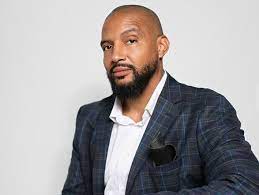
Headshot of Delano Massey per his website

I like his response to the question about if he faced pushback on his idea. He responded, "Resistance is a friend of mine." 

Initially there is always pushback, but Massey wasn't frustrated by it. Instead, he took the opportunity to frame the idea in a different way to help others better understand. 

One story that serves as an example of reframing a story was published on November 8 by Massey and other contributors covering the funeral for a man who had passed 123 years ago. The reason for the delay was race related. He was a Black man killed in a massacre done by White supremacists. Massey emphasized the fact the it was more than a funeral, it was Joshua Halsey receiving recognition for the injustice he faced. 

Massey's team played a role in the story production by bringing a diverse perspective to the table ensuring the coverage was done appropriately and right. 

Another story was the trial around the killing of Breonna Taylor. It was the first major case the team worked on. Massey and his team made sure the network understood the trial needed more attention. At the time there was already a lot of coverage, but the grand jury decision was crucial news that needed highlighted. 

Massey exemplifies what it means to be an innovator. I admire his confidence and insight within the newsroom and hope to carry those values myself in my future journalism career. 


America's Mass Shooting Epidemic

 Emily Baron 

eb113717@ohio.edu


                                                                Image courtesy of NBC 


As COVID-19 continues to sweep across nations another pressing issue has been responsible for taking lives pre-pandemic and post-pandemic: mass shootings. The Gun Violence Archive defines a mass shooting as, "if four or more people are shot or killed in a single incident, not involving the shooter." Mass shootings are not a new issue but the alarming accelerating rate of occurrence is. According to Forbes, in 2021, there has been more than one mass shooting a day. 

It is important for journalists to be aware of the way that mass shootings are covered in media. Proper and thorough coverage is imperative in order to accurately spread information, but is there a time when the content of the coverage becomes too much? Some think so. Adam Lankford, associate professor of criminology and criminal justice at the University of Alabama, says that sometimes coverage of mass shootings is “facilitating and fueling subcultures with people who are disturbed and troubled." 

The possibility of excessive coverage inciting mass shootings is not so unfathomable as it is true that mass shootings naturally garner lots of attention in the news. And attention is the specific issue some choose to pin as the reason for why so many mass shootings are incited in the United States. The issue is not covering the shooting itself, but the coverage on the perpetrators of the shootings, according to the National Center of Health Research, which uses the term "the media contagion effect" to explain why people imitate certain behaviors solely for attention. 

Careful consideration is a must for media stories on mass shootings in order to ensure that the coverage is centered on the victims and the incident's impact versus the perpetrator and his or her motivations. An example of a perpetrator whose backstory received  massive amounts of media coverage is mass murderer, neo-Nazi and white supremacist Dylan Roof. The high rates of coverage potentially leads to normalization of mass shootings, and high rates of information focused on the perpetrator can lead to unnecessary glorification for mentally ill people who want their name to be remembered, even at the expense of lives. 

Minimizing harm in media coverage is the journalist's duty. Education on mass shootings and how to prevent them is one way to potentially reduce the number of mass shootings in the country. Raising social consciousness on the issue at hand can very well be the first step towards a solution. 

Monday, November 8, 2021

School Shootings: Why the Perpetrator Should not Receive Coverage

 Alex Semancik

as477018@ohio.edu


In recent years, the increase in mass shootings, especially school shootings in the United States is one of the most terrifying trends in media coverage. The shootings themselves are obviously a traumatic and shocking event for the local community in which they occur, however, if they are not covered, correctly, concisely, and accurately by journalists more damage to that local community and our society as a whole is likely to occur. According to a PDF from reportingmassshootings.org, "the manner in which the media report on mass shootings can contribute to contagion (copycat) behavior." This may seem like daunting responsibility for a journalist, however, anyone in a media field can utilize some basic practices to minimize harm to the public when covering a school shooting and still produce a newsworthy story. 

The first thing a journalist should be aware of when covering a school shooting is the perpetrator of the incident. The perpetrator should be mentioned as little as possible. Sensationalizing or reporting too in-depth on anything relating to the shooter could potentially inspire copycat crimes and most certainly would traumatize the victims and anyone else affected by a shooting. "As long as the media continue to focus their news stories on the attacker, it is likely that these copycats will continue," according to an article from the National Center for Health Research. Topics like the shooter's mental health or motives should also be avoided unless they truly add more to the story. Even if they are discussed they should be discussed delicately.

Photo courtesy of undark.com

Rather than focus on the perpetrator, the goal of a reporter should be to educate the community on how to deal with and hopefully prevent school shootings. In the tragic Parkland shooting, the perpetrator's name was mentioned far more than Aaron Feis'. Feis was a coach in Parkland at the time that saved several students' lives, according to the National Center for Health Research. Reporters should take note of that example and attempt to tell a story of bravery and heroism amidst a tragedy rather than giving a school shooter a platform to receive the notoriety they crave.

School shootings are no doubt a tragic phenomenon and an unfortunate trend in our modern and evolving society in the United States. To hopefully diminish the increase in school shootings journalists should adhere to specific guidelines to both minimize harm to the public as well as inform and educate them.


Sunday, November 7, 2021

The Government Cannot Determine Journalistic Guidelines for PR or News


Opinion | Liberals, Don't Lose Faith in the First Amendment - The New York  Times
Photo from the NYTimes.


The most interesting piece from this past week was entitled, “Marketers must make the ethics of content creation a top priority.” What was so fascinating about this piece as its assertion that the government can not and should not be able to define ethics for journalists.


I think that this belief is spot-on. 


One of the key values that this Ethics class has discussed is independence. Independence is the value that separates the ethical journalist or PR professional from a propaganda-producing-hack. The independent PR professional or ethical journalist makes decisions that tell the truth, not simply paint a picture of whatever an audience wants to see.


This idea of pursuing truth is clearly at odds to the government, to whom truth is nothing more than a word.


History has proven time and time again that governments should not be in charge of deciding what is ethical or unethical for journalists. There’s a sacred relationship between the watchdog journalist and the shady, untransparent journalist that must be maintained. If the government is determining what a reporter or writer can or can not say, then how will our profession ever recover from the low level of trust it currently has?


The answer is that it wouldn't. There would be an endless amount of outrage about the government abridging an American's right to the first amendment.


I think that this is actually especially true in terms of marketing and branded content. For news articles, there will always be a balance of telling stories that are truthful but keep the peace. However, in content marketing, the involvement of the government in the ethics process could be disastrous. 


For instance, one must consider the relationship between elite, wealthy corporations and Washington politicians. It’s no secret that billionaires and corporations have bought off politicians to an anti-democratic extent. This dark money has impeded a countless list of progressive policy and reforms because, when money talks, the government listens.


As such, there stands a present and real danger that if the government becomes involved in creating/maintaining ethics guidelines, then they will pass policies that either censor journalists for their own gain or give corporations more power to create unethical stories for their financial benefit. That cannot be allowed to happen and would only harm the relationship between newswatcher and journalist further.


It’s because of the government’s greed that I believe in the article’s assertion that the government is not capable of setting guidelines for journalists. While its admirable that the FTC weighed into the conversation, journalistic associations should be in charge of deciding their own guidelines, especially when its comes to branded content.


Instagrams Branded Content Ads

 Madison Kopp

mk193818@ohio.edu


Image from Instagram 

Over the years, Instagram has come out with new advertising for brands to sponsor influencers posts. It is part of a broader platform focused on improving the relationship between creators and businesses. 

According to Instagram, they define branded content as "a creator or publisher's content that features or is influenced by a business partner for an exchange of value." This value can include monetary payment, or free gifts. 

Their policies require anyone, no matter if they are on a creator, business or personal account, to tag the business partners in their branded content posts when there is an exchange of value between a creator and a business partner. 

Starting in 2017, Instagram introduced the Branded Content Partnership Program after the FTC, the Federal Trade Commission, took drastic measures against influencers who were promoting products for brands without telling their followers that they were being sponsored. The features allows the influencer to include a tag in the header. This is to make it clear to followers that the photo is related to sponsorship.

A study conducted in 2018 by YouGov, have also found that 92% of Instagram users distrust ads that are not clearly labeled. This study is important because when an influencer just clearly states that the post or product is sponsored it will have a more positive impact on the public. 

The Instagram Branded Content Ads helps improve the relationship of trust with the audience, now the ads are clearly labeled. It also improved the level of trust that brands have in influencer marketing. 

The influencer marketing industry has increased due to Instagram. Another trend related to the collaborations between influencers and brands advocates for more personal and authentic relationships. These marketing strategies are needed to generate engagement, trust and increase the chances of more people getting involved. 

Influencer marketing is a new industry, which has problems related to the topics of transparency and distrust. But, with new updates and rules, there are attempts everyday to try and resolve the issues.