Wednesday, October 24, 2018

Blurred Ads?

Jacquez Printup
jp583215@ohio.edu


In "The Ethics of Branded Content," Ann Willets goes into detail about the potentially blurred lines of how people that work in the public relations field should interact with branded content. First, what exactly is "branded content?" According to Medium.com, branded content is "content that does not involve traditional advertising. It can include articles, videos, podcasts, and even live elements that bring relevant value to the consumer. It is not advertising in the way most people think of."

The problem is not the branded content itself, it is the fact that it is becoming more and more challenging for readers to be able to tell the difference between advertising and journalism. One of the big ethical challenges that was written about in this article was the issue of trust. Trust and honesty are two of the biggest commodities that exist in journalism. One, as the journalist, you are to be honest with everything you do because you are representing not only yourself, but your employer as well. And two, trust is important because the public relies on us to bring them news that is honest and relevant. So if the content that we are putting out in reality is paid advertising and not and editorial piece, we will lose the public's trust.

Another way companies are able to promote their stuff without creating advertisments is by using social media influencers. In other words, social media influencers are people who have big followings on social media. What these companies do is reach out to these people and reward them with money and products to post on their social media pages about how good their product is. Recently, more and more of these influencers will either start or end their post with "#Ad", or label it with "Paid Partnership with *blank*" which lets their followers know that the content they just posted is an advertisement. This is an ethical choice that ties into what was mentioned earlier about trust.


21six.com

In this YouTube video, ABC News did a story with a well-known fashion influencer who went in depth and described how these designers and companies work with her and how they work together to present content to the masses. Again, this is a common strategy that many companies use with well known YouTubers, actors, musicians and other public figures to get more traffic pointing towards their products. 

One example of branded content is The Lego Movie. A lot of people did not know this, but this movie was a crafted 90-minute advertisement that taught a lot of important values to the viewers, mainly kids, that watched it. Now after watching, kids everywhere are connected with Legos and parents are influenced to buy them. 

Personally, I do not think this is unethical at all and I do not see a problem with it. It is a movie that was targeted and aim towards children and that's exactly what it did. Using the movie as an advertisement strategy I do not find to be wrong, but a great tool to promote their products.

Tuesday, October 23, 2018

Does Branded Content Raise Ethical Concerns?

Jake Wernick
jw912314@ohio.edu

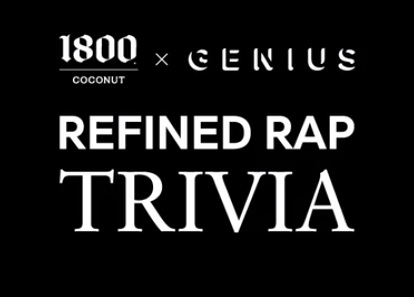
Reading "The Ethics of Branded Content" by Ann Willets made me think about an ethical issue that does not often occur to me as an "ethical issue." As a marketing major, thinking about the term "branded content" does not as much make me think about ethical issues, as much as it draws my interest. In fact, branded content is actually a field that I am heavily interested in exploring as a career path. The reason for this is not only does branded content help draw revenue for companies, but it also can be used creatively to come up with interesting content. For example, one media outlet that I am a big fan of is the music outlet Genius. Over the summer, they partnered with 1800 Tequila to put together "Refined Rap Trivia," a contest to test participants' knowledge of hip-hop. They offered one lucky contestant the opportunity to face off one-on-one with Chicago rapper Vic Mensa in a "final battle."
Photo via: Genius
To me, this is not only an interesting and creative example of branded content, but also one that in my opinion, does not raise any ethical concerns. There is no type of deception involved in this advertisement, but instead, the advertisement does offer the viewer an opportunity to earn a reward, with little to no cost for them to do so. The advertisement also always makes it clear that the content is brought to you by both Genius and 1800, to not only remind the viewer that they are being advertised to for their own benefit, but also to remind them who it is that is bringing them that content, for the advertiser(s) benefit.

Thinking about the subject more, it is understandable how many people may have skepticism in regards to branded content. Many media outlets use it as sole sources of content. Oftentimes, their use of it makes it sometimes may make it difficult for viewers to determine what is and is not an advertisement. With this problem, viewers may be more susceptible to the advertising, and thus, an easy target. In order to counter this, it is important that media outlets find balance and also properly label branded content as such. No media outlet should be solely focused on paid advertising, as this takes away from the true heart of journalism, and instead, focuses solely on turning a profit. It is also very important that media outlets properly label brand content as such in order to let their viewers know that they are being exposed to an advertisement. From there, it is up to the viewer whether they allow themselves to be influenced by the content. While many people may believe that it is up to them whether they are influenced by content or not regardless, an advertiser who is working twice as hard to persuade the viewer can be more likely to have an impact on someone who believes they are just viewing normal content. As long as outlets do not attempt to be sneaky with their branded content, its use can still be beneficial to all involved parties. Instead of trying to trick the viewer, outlets should focus their time more so on thinking of ways to intrigue the viewer with the branded content.

Blurring the Lines of Journalism and Advertising


Elijah Sweet
es008215@ohio.edu

Today, many media outlets are blurring the lines between journalism and advertising. Media partner with companies and then produce stories that promote a new product or service. This is an example of "native advertising."

The more media outlets produce these stories the more difficult it is for the public to tell the difference between journalism and advertising.  The relationship between Samsung and The New York Times is a good example of how native journalism is shaped today.

In the article by Media Shift that we read for class, Ava Sirrah explains that The Times creates video content using Samsung Virtual Reality and posts it on the Times' 360 Videos page. The New York Times and Samsung never came out publicly to tell people the 360 video campaign was a sponsorship or advertisement. The more news outlets create content promoting other companies, the more difficult it is going to be for people to know what is real journalism and what is advertising.

On Last Week Tonight with John Oliver, a news satire show on HBO, Oliver explains how and why news outlets are feeding the public advertisements.He explains that many media outlets make the majority of their money from sponsored news content.
Last Week Tonight with John Oliver


According to Native Advertising Institute, Buzzfeed relies heavily on native journalism for revenue. Buzzfeed posts many articles on its website that are sponsored by different companies. This is an issue because the more we see news outlets help promote companies,  the less the public knows what is real news and what is propaganda.
Image result for buzzfeed native advertising
Photo by: SEMRush Blog

As long as people are not willing to pay for news content, native advertising in journalism will continue to grow because of how big of how much money news companies can make from it. But, can people actually tell the difference between sponsored content and independent journalism?

According to a study by IAB in 2014, 41% people are not aware when news content is being sponsored. That number should concern news outlets. Reporters should strive to be honest and transparent with its audience and not hide advertisements to make them look like actual new stories.

Native advertising in journalism has its place in news. It has certain benefits including bringing in revenue for both the media outlet and the company, and it also gives the public a chance to learn new information that might benefit them. But it should be evident to the reader when an article is being sponsored.

However, a journalist's goal should never be to deceive their audience. As native journalism continues to grow, reporter's need to find ways to make it apparent that they are promoting an advertisement.

Also, news outlets cannot and should not rely completely on native advertising for their news content. A journalist's duty is to try to be as independent as possible. Journalism should first and foremost be about telling the truth and not pushing propaganda.

Additionally, people should be made aware that native advertising does exist and they should always be checking to see if what they are reading, listening to, or watching is independent of promotions. It is important to make sure that the public can see through the blurred lines.


A New Age Means New Problems

Lukas Moore
lm169715@ohio.edu

   Ask someone 20 years ago about digital ad fraud and they would look at you with a blank stare. Same thing with how to regulate internet porn, or how to ensure users on Twitter are actual people. So many of the problems we face today with the internet are problems we couldn't even imagine in 1998. We are struggling with these problems too, with a lot of blog posts just like this ranting on how these problems need to be addressed and need to be fixed. News and talk shows rant on end about all the problems of the internet and its harmful repercussions, they rant on how the government needs to step up and fix these wide ranging and complex issues immediately. The thing is, we all just need to relax. These problems will work themselves out in due time, just like problems from other technological advancements worked itself out. The telephone and television both had issues in terms of distribution and regulation that were hard to figure out, but we pushed through it and now we have a system that works. This will be the same story for the internet and especially advertising on the internet. Although there are some major problems that I'll touch on in a second, they are fixable issues, they are issues that will be solved. So, no need to panic, no need to claim the world is in a worse place, we will be just fine.

Digital Ad Fraud

Advertisements online have faced many issues, including fraudulent advertisements. The most troubling quote I found from an article on the issue is from the CEO of a fraud detection firm who said that some digital ad fraud is so egregious that the only way it can be successful is because nobody cares. This is troubling to me because although patience is key on fixing these complex issues, we also have to care about these issues to fix them.
  Allowing false advertising or not fulfilling the promise of certain advertising promises is fraud. Us not caring about the fraud is a societal issue of not valuing the truth, or honesty. Which is so much more important than we admit.


Truth

We as a country, as a culture, as a collection of human beings must start valuing the truth. Our social media is filled with half-truths, we only showcase our brighter sides. We lie to ourselves constantly, we would rather a false statement support our opinion than a truthful statement go against it. This attitude towards the truth, which we see in digital ad fraud, is a poison in our society. If we just valued the truth a little more as individuals I feel that a lot of our problems would be fixed.

But even if we don't have a societal epiphany about the truth, this issue of digital ad fraud will work itself out. We will adjust, find new ways to regulate and keep these companies in line. We will figure it out, we always have.

Advertising Starts Young

Natalie Matesic
nm989014@ohio.edu

At what age do we draw the line with feeding our children content that will forever effect the way they think, buy, produce, and live their day-to-day lives? Where does this age start?

I'm sure we all remember being kids, watching Nickelodeon and seeing ads for everything from Hot Wheels to Barbie and Polly Pocket dolls, and so much more. We all remember our favorite commercials when we were kids such as the rolling can of Campbell's soup ad, or the Christmas time Hershey Kiss ads.

These advertisements forever changed and dictated the way our brains functioned and the way we consumed media and products. This idea of buy, buy, buy was ingrained in our minds since before we even knew what advertisements were.

Advertising doesn't affect MY child though, right?
How old were you when you saw your first beer commercial? I can't say exactly when my first time was, but I know it was way before I was actually legally allowed to drink it.

A health researcher at Claremont Graduate University did an experiment on students from 7th to 10th grades' exposure to alcohol advertisements.

This experiment showed that this sort of advertising being fed to our children increases the odds of underage drinking and results in higher levels of delinquency.

This proves that advertising does actually effect children in ways that we never expected.

The American Psychological Association (APA) states, "[a] variety of studies have found a substantial relationship between children's viewing of tobacco and alcohol ads and positive attitudes toward consumption of such products. Children find many such commercials attractive (e.g., Joe Camel, the Budweiser frogs) and consequently have high brand awareness of such products and positive attitudes toward them."

This creates problems for when children grow up and believe that these products are harmless. I mean, the TV told me they were harmless, so they have to be, right?

This can also be applied to violent advertisements. Children are easy targets. This sort of media can alter the way they see violence and can be very harmful for when they grow up.

Advertising is hard to get away from. It's everywhere you go, in everything you do...etc.

"It is estimated that advertisers spend more than $12 billion per year to reach the youth market and that children view more than 40,000 commercials each year. These figures represent dramatic increases over those from the 1970s."

That's over 100 commercials a day the youth of America is consuming. Not to mention ad placement in movies and TV shows, or online advertising, and so much more to constantly ensure that we are engaging in consumerism.

Image result for child in front of tv
Courtesy of health.howstuffworks.com

But what can be done?
The APA states that a lot can be done, but the question is whether or not those measures will be taken.

These measures include advertising disclaimers, restricted advertising toward children, more work that psychologists can do to study the full effects of advertising on children, and so much more.

We know though that advertising means money, which means that unless a large reason is presented to end advertising toward adolescents, it will never stop.

Parents are advised to reduce screen time for children. It is also advised to watch the media that children are watching along with them so that you know exactly what they are consuming. This can lead to discussions with children about what advertisements are and avoid confusion in the future.

Monday, October 22, 2018

Is it Ever Ethical to Advertise to Children?

Katrina Kopronica
kk821516@ohio.edu

In a time when children are more exposed to technology more than ever, advertisements targeted at children are now more prominent more than ever. But that begs the question, is it ever really acceptable to advertise to children? 

The Facts:
As of 2015, 24.3 million children under the age of 11 were regular internet users. That being said, children under the age of 12 influence more than $500 billion in purchases. Bring the two statistics together and it's clear children make up a huge target market. This would make it seem that there shouldn't really be anything wrong with advertising to kids; I mean, they a major target group, and bring in billions of dollars in profit, right? Well, not so much.


Photo Courtesy of domain.me

The Problem:
According to Jennifer Harris, director of marketing initiatives at the Yale Rudd Center for Food Policy and Obesity, the top four products marketed to children are fast food, sugared cereal, sugary drinks, and candy. Now, it's one thing when it's toys being advertised to kids, but when we live in a country that has such high childhood obesity rates, perhaps the fact that McDonald's spent $42 million on Happy Meal advertising in one year is a little disconcerting. A study conducted by Thomas Robinson, a professor of pediatrics at Stanford University and Lucile Packard Children's Hospital found that
"researchers looked at the effects of branding by giving 3- to 5-year-olds two portions of identical foods, one set out on a McDonald’s wrapper. The children were asked to point to which foods tasted better and, Dr. Robinson said, “overwhelmingly, for hamburgers, French fries, baby carrots, milk or juice in a cup, kids would say the one on the McDonald’s wrapper tastes better.”"
What This Means:
Dr. Robinson also found in another study done on preschoolers, just 30 seconds of exposure to a product they've never seen before changes their preferences for brand. Children are incredibly vulnerable. When adults see advertisements, they know to be skeptical. Kids on the other hand, they have a hard time distinguishing these things. Children are still learning how to separate whats fake from reality, their brains simply aren't developed enough to understand how advertising really works. And all this exposure from such a young age can have a negative impact on them. Even with middle and high school aged kids studies have found that constant exposure increases underage drinking rates and unhealthy behaviors associated with drinking. 

Is there a solution?
While advertising to kids just simply can't be eliminated entirely, many businesses have taken a step in the right direction.
"In January [2014], 18 companies, including Campbell's Soup, Dannon, General Mills, Kellogg's, Pepsi, and Kraft, adopted strict category-specific nutrition criteria for food that's advertised to children, making it easier for parents to compare products across brands. Though not every item advertised to children under 12 met the new standards, companies have vowed not to advertise those products to kids until changes are made, and have gone so far as to cut certain brands from their product lines."
Not to mention, McDonald's has made huge progress in their advertising as well. Happy Meal commercials now almost always advertise their apple slices, yogurt, and milk options as part of a balanced meal. 

All in all, advertising to children, especially under a certain age, just isn't ethical. How can you expect such a young child to process the information their receiving from advertising in a way that isn't at all negative? The good news is we're getting to a point of change, where people are coming out and saying "hey, this isn't right" and companies are taking note. Perhaps there is some hope for the future of advertising to children.

Digital Marketing and Truth

Michael Kromer
mk428915@ohio.edu

Talking about truth in advertising is a very tricky subject in the digital era. Truth can be related to the amount of people who are actually viewing media purchased by advertisement agencies, or truth can relate to what is being said in the advertisement itself. And even when an advertisement is honest and has truly landed on screens of real people there are still countless ethical issues that can occur.

According to the Federal Trade Commission (FTC), "federal law says that ad must be truthful, not misleading, and, when appropriate, backed by scientific evidence," and this refers to all ads "whether it's on the internet, radio or television or anywhere else." So with this in mind, all digital advertisements should be truthful with no exception, and for the most part, this is the case. However, the digital advertising space's honesty comes into question in regards to impressions.

Impressions in this case means the amount of views an online advertisement receives from users. This is how an agency measures the success of an advertisement and how companies are directed to spend their money online. But impressions are not always real. In fact, impressions frequently are just bot, or in other words fake, accounts that will never result in any return on investment for the company that shelled out the money to buy the creative. This is what is known as data fraud, and this is a major issue in the digital marketing space that has not yet been solved.

So even though corporations are being held to an extremely high standard as monitored by the FTC, the websites that supply analytics to the ad agencies continue to lie and boost the amount of impressions per post, therefore earning them more money from advertisers. When it is broken down, this is basic theft of marketers' money, yet nothing has been done about it. And if digital marketing wants to continue to grow to the size of traditional advertising platforms, there will need to be some sort of regulation on accounts on Facebook and Google in order to ensure that not only the customers, but also the marketers, are being told the truth.

Courtesy of go-digital.net


Aside from the need for marketers to know the truth about how well their advertisements are doing in the online sphere, they should also know that consumers are simply getting fed up with ads. And while the customers have been getting annoyed with ads since ads existed, in the digital age, they now have to power to stop seeing ads altogether. In fact, both Android and Apple phones offer software to block advertisements so users no longer have to be bombarded with pop-ups and annoying videos. But what does this mean for the marketer? Online spending is becoming increasingly prevalent while simultaneously television and radio use is declining heavily, so the desire to advertise online grows everyday; but now users have the ability to shield themselves from paid messages.

As a result, marketers will now have to turn to organic growth online to gain a following an project their message. This means that advertising will move from paying per audience member, to working harder on the content itself to attract new customers. While this may seem appealing to consumers, this will be much more challenging to monitor and regulate. Since it is not technically an advertisement, but instead, a creative piece of content that is created by a company, does the FTC have the right to regulate it? As this new form of online content becomes more popular it will be interesting to see how truthful the content is, and how then, the FTC, and the public will react.

However, in any case, the ethical thing to do for any company, journalist, or online provider to do, is to tell the truth and nothing but the truth under all circumstances.