Erika Barth
eb210312@ohio.edu
Honesty and integrity have always made up a large component of what separates a journalist from anyone with an opinion. We turn to them when we want the facts, and have become conditioned to believe that what is said is the truth. While it's no secret that everyone has lied at some point in time, journalists are held to a higher standard since they are broadcasting to the public.
It's hard to say what posses journalists to fabricate the truth. The same could be said with politicians for that matter, but the main point to take away is the fact that a profession founded on truth is heavily damaged when a journalist is caught in a lie. Credibility is everything to a journalist, and without that, say goodbye to the career of your dreams (or so it should go).
An interesting point that Carol Marin makes is that "there are no laws of news... it ends up being sort of your own guiding compass that will determine what you will and won't do." Unfortunately, in recent years, not all journalists have used a compass that pointed due North.
Take for example, Brian Williams, who is best known for his role as NBC's Nightly News anchor for nearly 10 years. Up until early February of 2015, millions would watch his news report unsuspecting of any fowl play. This all changed though when Williams was caught fabricating a story about his location in a helicopter during the 2003 U.S. invasion of Iraq.
Not only was Williams caught saying his version of the truth once, but multiple times on live tv! That's pretty scary considering he's a guy we are supposed to trust. A following investigation included close to 10 other incidents where ethical boundaries may have been crossed. So why would he choose to lie?
Surprisingly enough, while his reputation was severely damaged, MSNBC decided to hire Williams back in June 2015. While he did lose his current position, I still find it quite hard to believe that the company would hire him back considering the amount of other incidents that were found during the investigation. This really speaks to the kind of organization and integrity that NBC doesn't apparently care about.
Is this someone we really want to see presenting news again? Although second chances are great, I don't think this was a great move made by NBC.
We as viewers should be aware that not everything presented should be accepted without proper evaluation and fact checking. As this scandal suggests, even someone that is perceived as credible can't always be trusted.
While this incident does not represent the standards that every journalist chooses to adopt, it does not help plead the case that viewers can trust everything that is being presented on news mediums. A word to the wise is to be cautious of every so called "fact." Although I'm not saying disregard every journalist completely, it's time for the public to start doing some more research on of our own.
Tuesday, September 1, 2015


Reporting the Truth
Ashley Driscoll
ad615512@ohio.edu
Today's society is exploding with numerous forms of technology. This makes it possible for news to spread in a matter of seconds, whether this news be true or false. Society's use of technology and social media gives people who are not professional journalists the opportunity to report as is they are true professionals.
This overwhelming use of social media can make it difficult to decipher what actually defines news?In recent times, news and entertainment have been blending together and society is losing site of what news is actually defined as. What defines something as newsworthy and important?
Although this use of technology can be extremely beneficial to news media, it also has its downfalls. Many people are so determined to get a story out before another network releases it, that they don't do everything they can to make sure that they information released is indeed accurate.
ad615512@ohio.edu
Today's society is exploding with numerous forms of technology. This makes it possible for news to spread in a matter of seconds, whether this news be true or false. Society's use of technology and social media gives people who are not professional journalists the opportunity to report as is they are true professionals.
This overwhelming use of social media can make it difficult to decipher what actually defines news?In recent times, news and entertainment have been blending together and society is losing site of what news is actually defined as. What defines something as newsworthy and important?
Although this use of technology can be extremely beneficial to news media, it also has its downfalls. Many people are so determined to get a story out before another network releases it, that they don't do everything they can to make sure that they information released is indeed accurate.
Releasing information that is unethical and false undermines
the meaning of news. It portrays journalism field in a negative manner. Journalists are under pressure everyday debating whether to report what is 100% truthful news, or to bend the truth and make a more
interesting story.
It is upsetting to me that people abuse their journalistic
powers. This reflects poorly on all journalists and changes the way people view
journalism. When people first began to report news, the journalists were praised
for their work.
A prime example of a journalist who is praised for his work
is Anthony Lewis. Lewis is the winner of multiple Pulitzer Prices and is the columnist for the New York Times. He is an example of someone who is true to his word and is determined to report the newsworthy truth.
Unfortunately, that is not always the case in today’s day and age. There are many entertainment journalists who pose to be ethical and newsworthy reporters. This gives professional journalists a bad reputation and makes it difficult for the public to believe their reports to be the truth. This fake journalism is also defined as pseudo journalism and is extremely bad for the media's reputation.
Some people make the argument that because society is evolving so much, the news media should evolve also. I agree with this statement, and I think that the reporting world is keeping up with the technological changes. However, even though the ethics and morals of society are changing, the ethics of journalism should not change for the worst.
There will be many times that journalists have
to report on issues and stories that may not serve much importance to them, but
it is their job to do the best that they can. As journalists, our job is to
report news that we believe is newsworthy and important to the public. It is
our responsibility to report that news in the best ways that we possibly can.
It is important to utilize the tools that are
available to us while providing news to the public that is reliable and
trustworthy. There will be many times that journalists have to report on
issues and stories that may not serve much importance to them, but it is their
job to do the best that they can. I hope that the journalism world will work
toward regaining the integrity that it once had, and that it still deserves.
 |
| Courtesy of John S. Knight |
What is Newsworthy?
Jeanne Cantwell
jc446712@ohio.edu
What you consider newsworthy could be just gossip to someone else. We live in a world with a variety of news outlets, that makes anyone with their own blog a journalist. I find myself constantly wondering if the articles that litter my Facebook feed are newsworthy. Last week my feed was filled with articles regarding the WDBJ reporter and cameraman who were shot and killed during a live-shot. A story like this makes headlines on all media platforms. Turning on any nightly newscast you were almost guaranteed to hear about the horrific incident. Scrolling through social media platforms you could see everyone's reaction to the tragedy.
jc446712@ohio.edu
What you consider newsworthy could be just gossip to someone else. We live in a world with a variety of news outlets, that makes anyone with their own blog a journalist. I find myself constantly wondering if the articles that litter my Facebook feed are newsworthy. Last week my feed was filled with articles regarding the WDBJ reporter and cameraman who were shot and killed during a live-shot. A story like this makes headlines on all media platforms. Turning on any nightly newscast you were almost guaranteed to hear about the horrific incident. Scrolling through social media platforms you could see everyone's reaction to the tragedy.
 |
| Photo via Cartoon Stock |
Not even a week later I open my Twitter account to see everyone reacting
to Nicki Minaj throwing shade at Miley Cyrus during the MTV Video Music Awards.
It’s incredible to me how quickly news changes. One week a nation is shaken by a
shooting that has people reconsidering gun laws. By the next week they are
taking sides in a heated celebrity feud. Is one story more newsworthy than the
other? Asking your parents they would most likely say that the WDBJ story is
more important to cover. Although asking a thirteen-year-old Miley Cyrus super-fan I’m sure they’d say the VMA drama. This begs the question of is it a
generational gap? In our reading The Elements of Journalism by Bill Kovach it says, “Every generation creates its own form of Journalism”, a statement that I
believe to be true.
I feel stuck between a generation that gets news from CNN after dinner
and another that uses Buzzfeed as their main news source. I find myself being
drawn to both if I’m honest. I think the world needs a healthy balance of both.
If we only focused on the tragedies that occur every day in our world what
shape would we be in? We need to sprinkle in some of the entertainment news and
viral videos of cute puppies to keep our sanity and faith in humanity. My
opinion might not be the popular one, but that’s the thing, it’s my opinion. So
who can decide what is newsworthy; it’s all personal opinion.
Last semester I took a course where we produced a newscast at the end of
each day. Gathering stories each day was a harder job than you’d think. Making
sure you constantly checked the wire to see if any news was breaking was a very
important job. Even during the live show, if a story broke the producer could
cut a story that wasn’t as important in order to run the breaking news. A blog post shares the eleven things that journalists consider newsworthy. Everyone can
find an item on this list that they agree with, and some that they don’t. If I
were able to come to any sort of conclusion on this topic then that would be it.
What is newsworthy to one is irrelevant to another. I think that many factors
like age, gender, social class, etc. factor in to this. So will we ever have an
answer for what is newsworthy? The best thing that a journalist can do in my
opinion is delivering the most relevant news to an audience, but what is relevant
can change within minutes.
The Government, Journalism and Public Relations
Gentry Bennett
gb455712@ohio.edu
The creation of journalism and journalistic ethics are surrounded by the government. Without the government, we wouldn't have First Amendment rights. Without First Amendment rights, we wouldn't have freedom of the press, thus eliminating the journalism we know today.
I come from a different side of journalism than those that populate the newsroom. I am studying public relations, defined by PRSA (the Public Relations Society of America) as "a strategic communication process that build mutually beneficial relationships between organizations and their publics" (PRSA.org). Based off of this definition, newsroom journalism and public relations are quite similar in that they both want to benefit the public.
Journalists faced massive ethical quandaries with the publishing of the Pentagon Papers in 1971. Although the Justice Department had already gone to court to ensure the publishing of the papers be blocked, the Washington Post picked up where the New York Times had left off and continued to publish after the court order.
In this instance, journalism brought justice to the people. Journalism represented the citizens' right to know what their government is doing and to inform them of governmental happenings. In this regard, journalism and the government were butting heads.
Like I mentioned earlier, government is the reason journalism in the United States has freedom of the press. What is public relation's relationship with the government? Does public relations also bring justice to the people, or is it the other way around?
The relationship between public relations and government is a complicated one. Advertising, a subset of the public relations model, is monitored by the government. The Federal Trade Commision (FTC) oversees and regulates advertising at a federal level. The FTC's goal (via FTC.gov) is:
Many people are familiar with the fairly recent documentary Blackfish, a deep dive in to SeaWorld's business tactics and the alleged mistreatment of orcas in captivity at the theme parks. Blackfish launched a largely spread boycott of SeaWorld parks and the call for their mistreatment of animals to be stopped.
In response to Blackfish, SeaWorld launched an aggresive public relations campaign in order to fix their badly damaged reputation. This campaign included "fishy tactics," as quoted by an Outside magazine article. One such tactic included in the article is the skewing of poll results. The Orlando Business Journal conducted a poll on whether or not the documentary skewed people's thoughts of SeaWorld. Although the poll results said 99 percent of people's thoughts were not changed, it was later found out that 54 percent of these votes came from one IP address, located at SeaWorld.
While frowned upon, no formal cases were brought to the FTC concerning this campaign. However, multiple sources shined light on SeaWorld's public relations tactics and allowed consumers to see the whole story.
In this case, there are four main agendas: the public relations team for Blackfish, the public relations team for SeaWorld, the journalists reporting on the story, and the government's bodies that oversee the first three.
Which agenda is correct? It's hard to say- that is an ethical decision that is up to the consumer (you!).
gb455712@ohio.edu
The creation of journalism and journalistic ethics are surrounded by the government. Without the government, we wouldn't have First Amendment rights. Without First Amendment rights, we wouldn't have freedom of the press, thus eliminating the journalism we know today.
I come from a different side of journalism than those that populate the newsroom. I am studying public relations, defined by PRSA (the Public Relations Society of America) as "a strategic communication process that build mutually beneficial relationships between organizations and their publics" (PRSA.org). Based off of this definition, newsroom journalism and public relations are quite similar in that they both want to benefit the public.
 |
| Photo via Mic.com |
Journalists faced massive ethical quandaries with the publishing of the Pentagon Papers in 1971. Although the Justice Department had already gone to court to ensure the publishing of the papers be blocked, the Washington Post picked up where the New York Times had left off and continued to publish after the court order.
In this instance, journalism brought justice to the people. Journalism represented the citizens' right to know what their government is doing and to inform them of governmental happenings. In this regard, journalism and the government were butting heads.
Like I mentioned earlier, government is the reason journalism in the United States has freedom of the press. What is public relation's relationship with the government? Does public relations also bring justice to the people, or is it the other way around?
The relationship between public relations and government is a complicated one. Advertising, a subset of the public relations model, is monitored by the government. The Federal Trade Commision (FTC) oversees and regulates advertising at a federal level. The FTC's goal (via FTC.gov) is:
"To prevent business practices that are anticompetitive or deceptive or unfair to consumers; to enhance informed consumer choice and public understanding of the competitive process; and to accomplish this without unduly burdening legitimate business activity."In this regard, the FTC is the advocate for the people. Where journalism's goal is to inform citizens in order to make them educated and informed people, public relation's goal is to inform consumers so that they can make informed decisions about what they consume.
 |
| Photo via IMDb |
In response to Blackfish, SeaWorld launched an aggresive public relations campaign in order to fix their badly damaged reputation. This campaign included "fishy tactics," as quoted by an Outside magazine article. One such tactic included in the article is the skewing of poll results. The Orlando Business Journal conducted a poll on whether or not the documentary skewed people's thoughts of SeaWorld. Although the poll results said 99 percent of people's thoughts were not changed, it was later found out that 54 percent of these votes came from one IP address, located at SeaWorld.
While frowned upon, no formal cases were brought to the FTC concerning this campaign. However, multiple sources shined light on SeaWorld's public relations tactics and allowed consumers to see the whole story.
In this case, there are four main agendas: the public relations team for Blackfish, the public relations team for SeaWorld, the journalists reporting on the story, and the government's bodies that oversee the first three.
Which agenda is correct? It's hard to say- that is an ethical decision that is up to the consumer (you!).
Sports Reporting or Invasion of Privacy?
Tim Craycraft
tc581413@ohio.edu
The information age that we live in today has many positive effects on journalism. Almost any piece of information that you could think of can probably be found somewhere on the internet. Any person can get something out there through Twitter, Reddit, or some other form of social networking. The negative side of this is that not all of this information should be made public. Somehow along the way the everyone in the world became amateur "journalists".
This has been affecting the sports world as much as anything. Professional athletes have become more celebrities than they are professionals or athletes. Every detail of these athletes' lives are being watched, photographed, and written about. The question becomes what aspects of their lives need to be covered and what should be kept private.
The invasion of privacy has been a big issue with stories like the Donald Sterling saga and countless domestic violence reports. The biggest story the we have seen recently is with New York Giants defensive end Jason Pierre-Paul. Pierre-Paul was in the middle of negotiating a contract extension with the Giants this summer when he was injured on July 4th. The Giants had offered him a 60 million dollar extension but took it off the table when ESPN's Adam Schefter tweeted out a picture of Pierre-Paul's medical record saying that he had a finger amputated.

The fact that this was released to the public is completely illegal. Medical records are supposed to be confidential but someone gave this to Schefter. Obviously, someone at that hospital is going to lose their job and probably get sued by Pierre-Paul but the question is whether or not ESPN did something wrong. Legally ESPN is in the clear because they were not the ones who released the record but should that be legal. It is possible that if Adam Schefter had never received the record than Pierre-Paul could have signed the extension without the Giants ever knowing he had lost a finger.
Journalists will always walk the fine line between what should be made public and what shouldn't. The problem is that its becoming easier and easier to cross that line.
tc581413@ohio.edu
The information age that we live in today has many positive effects on journalism. Almost any piece of information that you could think of can probably be found somewhere on the internet. Any person can get something out there through Twitter, Reddit, or some other form of social networking. The negative side of this is that not all of this information should be made public. Somehow along the way the everyone in the world became amateur "journalists".
This has been affecting the sports world as much as anything. Professional athletes have become more celebrities than they are professionals or athletes. Every detail of these athletes' lives are being watched, photographed, and written about. The question becomes what aspects of their lives need to be covered and what should be kept private.
The invasion of privacy has been a big issue with stories like the Donald Sterling saga and countless domestic violence reports. The biggest story the we have seen recently is with New York Giants defensive end Jason Pierre-Paul. Pierre-Paul was in the middle of negotiating a contract extension with the Giants this summer when he was injured on July 4th. The Giants had offered him a 60 million dollar extension but took it off the table when ESPN's Adam Schefter tweeted out a picture of Pierre-Paul's medical record saying that he had a finger amputated.

Courtesy of ESPN's Adam Schefter
The fact that this was released to the public is completely illegal. Medical records are supposed to be confidential but someone gave this to Schefter. Obviously, someone at that hospital is going to lose their job and probably get sued by Pierre-Paul but the question is whether or not ESPN did something wrong. Legally ESPN is in the clear because they were not the ones who released the record but should that be legal. It is possible that if Adam Schefter had never received the record than Pierre-Paul could have signed the extension without the Giants ever knowing he had lost a finger.
Journalists will always walk the fine line between what should be made public and what shouldn't. The problem is that its becoming easier and easier to cross that line.
Finding the Balance: Journalistic Freedom, Ethics, and Respecting the Citizen
Kayla Blanton
kb408112@ohio.edu
As our readings pulled from Bill Kovach and Tom Rosenstiel's book, The Elements of Journalism, point out, we as journalists are faced with multiple decisions and thought processes to maneuver through before, during, and after a story is produced. As representatives of ourselves as journalists and the media outlet we will be employed by, it's our job to consider all of these important elements with each and every story that our name is behind, no matter how big or small. Not only do we have to consider all of these with each project, but it's important that we consider each element with the same amount of interest and commitment.
What are these elements, you ask?
With every project we are assigned, we have to find a balance within our own freedoms that we have as journalists and American citizens, as well as between the ethical code of our own and that of the media organization for which we work, and last but not least, between said elements and the opinion and feelings of the source and/or third party involved.This third party can be considered as an interviewee who provides information for your story and/or the viewer that is consuming the content being produced.
If any of these elements are neglected, the quality of a story can be compromised. If not in the eyes of your own, it's possible that a source may think differently when they read a story. It's our job as journalists to make news, even the hardest hitting of news that many may have a hard time dealing with, digestible and informative, without sugar-coating true events. However, as journalists, I think it's important to understand the situation of a source in times of tragic news, and to know how to respect their thoughts and feelings in the production of your news story, without reporting in a biased or unprofessional manner. In other words, we should do our best to minimize harm on our sources, as discussed by fellow journalist and Society of Professional Journalists member Fred Brown in this article.
In an article found on The Barre Montpelier Times Argus website, a media ethics class similar to ours discussed this subject with a woman who has experienced being a target source of the media first hand. "It makes you feel entrapped," said Mariah Phillips, whose father, Capt. Richard Phillips was being held hostage by Somali pirates while she was being asked to provide more information on the incident. This is only one example of many situations where the sensitivity of a source must be balanced with a journalist's code of ethics and freedom to inform and ask questions.
Writing a balanced story that is put together based on the implementation of these elements is vital to every story, but especially those that will directly affect the personal life of a source. I think the Times Argus article provides a good example of this type of story, as well as the recent breaking story of the Roanoke, VA journalist shooting, that affected the lives of many. As journalists and as citizens, we never know when this type of news will break, so it's important to be prepared to ask yourself and your potential sources the questions that are ethically and journalistically sound.
kb408112@ohio.edu
As our readings pulled from Bill Kovach and Tom Rosenstiel's book, The Elements of Journalism, point out, we as journalists are faced with multiple decisions and thought processes to maneuver through before, during, and after a story is produced. As representatives of ourselves as journalists and the media outlet we will be employed by, it's our job to consider all of these important elements with each and every story that our name is behind, no matter how big or small. Not only do we have to consider all of these with each project, but it's important that we consider each element with the same amount of interest and commitment.
What are these elements, you ask?
With every project we are assigned, we have to find a balance within our own freedoms that we have as journalists and American citizens, as well as between the ethical code of our own and that of the media organization for which we work, and last but not least, between said elements and the opinion and feelings of the source and/or third party involved.This third party can be considered as an interviewee who provides information for your story and/or the viewer that is consuming the content being produced.
If any of these elements are neglected, the quality of a story can be compromised. If not in the eyes of your own, it's possible that a source may think differently when they read a story. It's our job as journalists to make news, even the hardest hitting of news that many may have a hard time dealing with, digestible and informative, without sugar-coating true events. However, as journalists, I think it's important to understand the situation of a source in times of tragic news, and to know how to respect their thoughts and feelings in the production of your news story, without reporting in a biased or unprofessional manner. In other words, we should do our best to minimize harm on our sources, as discussed by fellow journalist and Society of Professional Journalists member Fred Brown in this article.
In an article found on The Barre Montpelier Times Argus website, a media ethics class similar to ours discussed this subject with a woman who has experienced being a target source of the media first hand. "It makes you feel entrapped," said Mariah Phillips, whose father, Capt. Richard Phillips was being held hostage by Somali pirates while she was being asked to provide more information on the incident. This is only one example of many situations where the sensitivity of a source must be balanced with a journalist's code of ethics and freedom to inform and ask questions.
Writing a balanced story that is put together based on the implementation of these elements is vital to every story, but especially those that will directly affect the personal life of a source. I think the Times Argus article provides a good example of this type of story, as well as the recent breaking story of the Roanoke, VA journalist shooting, that affected the lives of many. As journalists and as citizens, we never know when this type of news will break, so it's important to be prepared to ask yourself and your potential sources the questions that are ethically and journalistically sound.
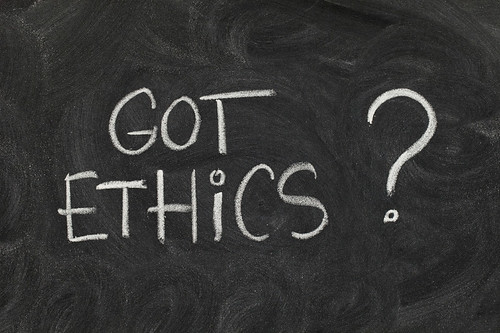 |
| flickr.com |
Diversity within the Newsroom
Tiffany Bey
tb908912@ohio.edu
tb908912@ohio.edu
Diversity in the newsroom is on the rise, and I
absolutely love it! Being an African-American woman and dreaming to be a
reporter someday makes me feel even more optimistic seeing more and more people
that look just like me on my television screen! Reporters such as Robin Roberts, Juju Chang, Soledad O'brien, Oprah, Gayle King and many more have paved the way for many minorities that hope to be in the news industry.
But then the question leads to, are the minorities just behind the scenes? Are they in the newsroom, but not on the television screen? Maybe they are, maybe they aren't. A newsroom is made up of many roles and the only role we mainly see on our television screens are the anchors, so with that being said, maybe there are more minorities in the newsroom than we think. Data still shows that we have a lot more work to do!
Although I've been noticing more and more diversity within the newsrooms, according to "American Society of Newspaper Editors" 90% of the newsroom employees are white. That means only 10% are minorities. This is an issue because America is made up of many racial backgrounds and just having white people in the newsroom is a false representation of America. In the text that we read titled "The Elements of Journalism" it says "getting more minorities in the newsroom is a target, but not the goal", and I totally disagree with that statement. I think the goal should indeed be to recruit more minorities into the newsrooms because diversity is something that brands a company.
 |
| Courtesy of American Society of Newspaper Editors |
Although I've been noticing more and more diversity within the newsrooms, according to "American Society of Newspaper Editors" 90% of the newsroom employees are white. That means only 10% are minorities. This is an issue because America is made up of many racial backgrounds and just having white people in the newsroom is a false representation of America. In the text that we read titled "The Elements of Journalism" it says "getting more minorities in the newsroom is a target, but not the goal", and I totally disagree with that statement. I think the goal should indeed be to recruit more minorities into the newsrooms because diversity is something that brands a company.
Viewers at home, want to be able to see people on television that look similar to them. That includes, Asians, African-Americans, Hispanics, Native Americans and etc. For example, If I'm at home watching the news and I only see white people on my screen, I'm going to think hmm are my people not good enough for the job? I want to be able to connect and trust what the anchor is telling me, but I can't do that if I'm questioning the fact that I don't see a minority in sight. Also, I think it says a lot about the company. Again, going back to the concept of "branding". If a news station only has white employees, it makes me feel that they're not open to diversity, which makes me disconnected to the news station.
Gender is also an issue. The pie chart above shows that only 38% females work in the newsroom. That's less than half! For years, diversity has been an issue in the United States of America, but I'm hopeful that there will be more progress in this area. Its strange to me because I feel that I see more female anchors than male anchors, so the data actually surprised me! Females have always been given "the short hand of the stick", but I still believe that I've seen more females reporters than males.
I'm looking forward to seeing more minorities in the news industry, and I'm definitely looking forward to be apart of that change!
 |
| Courtesy of Free Press |
I'm looking forward to seeing more minorities in the news industry, and I'm definitely looking forward to be apart of that change!
Subscribe to:
Posts (Atom)